L'origine de Bert

Get email updates of new posts:        (Delivered by FeedBurner)

Showing posts with label ips religious diversity. Show all posts

Thursday, September 04, 2008


IPS Forum on Religious Diversity in Singapore
Part 3 of 3: Part 1; Part 2; Part 3


Session III: Some highlights: Islam and Christianity


Discourses on Islam in Southeast Asia and Their Impact on the Singapore Muslim Public
Dr Noor Aisha Bte Abdul Rahman
Department of Malay Studies, NUS


Research here is very scant. My research is mostly from literary writings, the papers, sermons, fatwas and legal opinions.

Islam in Singapore is not monolithic. I'm looking at dominant discourses. Dominant discourses are shaped by the religious elite. We have traditionalism here, which is very selective. People think they shouldn't question established discourse. Malaysian and Indonesian discourse does not show up here.

In the last decade, the views promoted are about non-exclusivity and tolerance and accommodation. The dominant discourse is non-fanatical, because the common folk don't welcome fanaticism. Fanaticism is artificially imposed.

Now there's an emphasis on pietism, the aspects of which are:

i) Personal salvation. Be moral and the afterlife is a reward. There is a focus on rituals, e.g. how to refine your prayers

ii) Halal vs Haram. This is divorced from contemporary ideas on ethics, but is based on theology. e.g. Gambling, living donor organ transplants. Discussion is isolated from a concrete level. It's just Dos and Don'ts - Legalism in the discourse.

iii) A dualistic worldview. This World vs The Afterlife, Religion vs The Secular, and about balancing each.

iv) Ethics. These are authoritarian and based on God and punishment, rather than love.

v) The position of man - a small and insignificant creature, powerless and weak. God is Great and Man is Insignificant. There is no look at the dynamism of man which is a fundamental part of the Muslim tradition.

vi) Reason, and the ambivalent attitudes towards it. There is doubt and suspicion. Reason is a creation of God, but it is a double-edged sword which leads you astray and undermines human potentiality.

The discourse is interwoven with myths, magic and mysticism, and incorporates the unseen and irrational. For example, Jinns, which are not in the Koran. There is discourse about Jinns, what they eat, how they tempt Man and what they look like.

The discourse is also characterised by Utopian thinking, which is suspicious of existing systems. It creates a new one based on the authenticity of an imagined authentic past. It is indifferent to the role of ideology in history (e.g. Democracy), and sees only Islam.

Modernity is seen as not in consonance with Islam, and there is a desire to return to the perfect Islam of the past. Imperfect modernity is to be discarded. But then, this does not engage with real systems and contemporary ideology. It's not political since it does not undermine and challenge, but it is not real engagement.

There is a need to adjust to the problems of modernity rather than just regress.

All of this is due to the role of feudalism in Islamic history, where there was no room for thinking and intellectuals. Then, colonialism forced modernisation upon the Malays; it was external and thrust upon them instead of internal. There is no local intellectual tradition.


Negotiating Christianity with Other Religions: The Views of Christian Clergymen in Singapore
Dr Mathew Mathews
Department of Sociology, NUS


People are pissed off by Christian evangelism and want a rule against religious touting.

In Singapore, Christianity is evangelistic. Most growth has been in the Charismatic stream in the last 2 decades. It is generally conservative, and influenced by evangelistic/conservative American churches. Even in Malaysia, there are more liberal Christians than Singapore.

Conservative Christianity believes in Biblical Literalism, has a concern about Truth Claims and is supposedly more Intolerant.

57 in-depth interviews were conducted, and 167 Protestant and 16 Catholic clergymen surveyed.

30% had moderate-strong fears that religious dialogue could compromise religious convictions (they were mostly Protestant - the reasons for this were supposed to be explained later but he didn't get down to it so I guess I'll just have to read the book); most Protestants were apprehensive about religious dialogue.

They thought inter-religious dialogue was meant to show that all religions are equal. They didn't want comparative religion to dilute their Absolute Truth Claims about their faith. Though one guy said peace helps the cause of evangelism.

40% thought it was hard to get donations from a non-Christian religious group (because they'd feel bad if members of the group were converted), and 30% thought it hard to cooperate with non-Christians for charitable causes.

Most were exclusivists; though they thought other religions had some good, they disagreed with their practices. Some had the Anonymous Christians view (they don't believe in Christ, but they are good people so they are Christians - they just don't know it yet).

Although most were exclusivists, they rationalised their not going around screaming "Repent" to non-Christians. One rationalisation was that they wanted to help people with day-to-day issues, and didn't care about Heaven and Hell because they wanted to save people from Daily Hell.

When preaching, the clergymen didn't mention other religions. They preached by asserting the truth about their religion rather than denouncing others ("possibly because of legislation").

73% said they would advise their flock not to bow to the coffin of a family member if the funeral was a non-Christian one. 93% said one should not hold joss sticks etc in non-Christian funeral rites, even if one knew this was not an act of worship (this was a Protestant phenomenon). This was because they thought these things would compromise one's faith in God, and Charismatics thought this would open you to non-Christian spiritual experiences.

Yet, there was compromise: 68% said it was okay to put flowers at a non-Christian altar table for one's ancestors.

Some rationalised this [Ed: their seeming heartlessness] by saying you should be filial in life and not wait for the funeral rites to make up for your lack of filial piety when the person in question died.

In all, there was rationalisation because this is was a secular state, but this did not dilute their exclusivism.

One policy implication was that dialogue should be about pragmatic concerns, about being the moral conscience of society.


Q&A

Q: The last talk was depressing. If they're exclusivists, there is no hope. People need hope so we can work together. I think different religions are all part of the same truth. Einstein said we cannot solve problems with the same mindset that caused them.

A: The trajectory of Christianity in many parts of the world is not going to change. Exclusivism does not mean you do not collaborate with or relate to other faiths. You think they're wrong, but you can relate to them as citizens and human beings. Islam and Christianity are exclusivise but they can cooperate.

Q: The implications of the Muslim paper are that they cannot relate to present-day reality.

A: Religion is infused with philosophy affecting their values and norms. The problem is how the discourse inhibits their playing a more active role in assimilating national institutions and adjusting to modernity.

You cannot be active citizens and promote stuff that's good for everyone because you're stuck because you base yourself on the past.

Q: How do we coexist? We should do what academics do with competing ideas. In Law, Economics and Philosophy there is no problem with such contention. In Religion there is.

Do we need such sensitivity? Why? If we apply the academic attitude in the religious realm, I don't see why we need sensitivity to avoid disorder.

Q: Is exclusivism relevant? The State is secular and must have pragmatic ideals.

If there's exclusivism, we need mutual respect so there's no provocation. If we've faith we cannot sacrifice the fundamentals. Different religions must work together across history to achieve harmony.

Q: Tolerance is not giving up your point of view. It's about accepting different opinions are equally valid, and that other people who hold them are equally rational [Ed: No, this is called Relativism.]


Concluding remarks

We must be sensitive about religion, because of the protests of Buddhist monks in Korea that the President is pro-Christian, and the problems in Orissa and North Sulawesi. *Usual National Education talk*

Wednesday, September 03, 2008


IPS Forum on Religious Diversity in Singapore
Part 2 of 3: Part 1; Part 2; Part 3


Session II: Interfaith Issues and Interaction


Religious Switching and Knowledge among Adolescents in Singapore
Assoc Prof Phyllis Chew Ghim-Lian
Department of English Language and Literaure, NIE


The first part of the presentation was on Religious Switching.

2,779 students from 6 schools: 4 neighborhood, 2 aided, were surveyed. 5.7% of them were religious switchers - they had different religions from their parents. 82% believed in some sort of deity. The sample had more Christians but fewer Buddhists than the last Census; the proportion of Muslims was the same.

Most (60%) who switched religions switched to Christianity or free-thought (19%). 6% switched to Soka, 3% to Wicca [Ed: Many people in the audience didn't know what 'Wicca' was] and 1% to Buddhism. The unexpected presence of Wicca was because the study was done in 2004-5, at the height of the Harry Potter craze, and all of the Wiccans came from one neighborhood school, so it was probably a peer influence thing.

There were 3 types of switchers: Buddhists/Taoists, Christians and Freethinkers. Switching occured from Taoism/Buddhism/Hinduism to Christianity, or Taoism to Buddhism. Christians tended to switch to free-thought, and free-thinkers to Christianity or Buddhism. Muslims did not switch.

51% of switchers used English primarily at home, 5% Mandarin and 10% were code-switchers.

The next part of the presentation was on Religious Knowledge.

Students were asked how much they knew about the 9 religions represented on the IRO (Inter-Religious Organisation) at the time of the study (it's now 10). Since the survey was done during their CME (Civics and Moral Education) class, they tried their best.

60% gave general comments on the religions (superficial comments from daily observation), 13% gave specific comments (more detailed comments) and 31% had no comment (I assume the first two categories were not mutually exclusive). Where specific comments were given, they were given only about the respondent's own religion, and they were in the form of doctrinal repetitions (e.g. Christ came down to earth for our sins) rather than neutral descriptions.

93% of respondents said nothing at all about Judaism, Zoroastrianism or the Bahai'i faith. The rest made wild guessed, that Zoroastrianism was about the sign of Zorro, Jews prayed to the sun and the stars and Bahai'i had something to do with the Dalai Lama.

Respondents described themselves in superficial ways, saying materialism and social activity made them happy.

Respondents said that religious tolerance meant "not talking about it", but they were very aware of the need to show respect toward race and religion.

24% of the respondents engaged in stereotyping. Hinduism was associated with "skewers" and Christianity with perpetual requests for money. Most stereotyping was directed towards new or minority faiths, for example City Harvest and Jehovah's Witnesses (who, they said, sacrificed people).

Yet, respondents knew about inter-denominational rivalry.

92% of respondents were not interested in knowing more about other religions. If they were, it was because of relationships (the religions of their partners). [Ed: From this point on, the speaker was talking quite quickly and I don't have the book with me right now, so the last part here may be wrong]

Relationship, happy feelings, purpose (idealism) and push factors caused people to switch religions.

46% learnt about their new religion from friends, and 7% from teachers and school counsellors [Ed: This is not supposed to happen]. Switching happened fast, with 1/3 happening within a month.

50% of switchers faced opposition from their parents, who said they were wasting time on non-studies-related activities, but they eventually relented.


Building Bridges between Christians and Muslims
Ms See Guat Kwee


This presentation was literally a sob story.

The presenter described a trip to the Holy Land with someone else. When she was with a Jewish guide, the places she went to were totally different from those the Palestinian guide brought her to.

She asked why there was no peace and harmony in the Holy Land, and was told to go to refugee camps, and there things went topsy turvey. She got hospitality, was welcomed and received stories and food.

A Muslim asked why God put all 3 religions on the same land, with so much suffering, and said maybe he wanted them to learn to live together.

She and the other girl did some research on Singapore, and discovered the IRO. In Israel there were >70 organisations involved in inter-religious work.

In the Holy Land, the presenter engaged in therapy sessions, and then brought the ICCI (Interreligious Coordinating Council in Israel) to Singapore in 2001.

One Taoist she spoke to was very upset because Christian evangelists, though they saw the Taoist altar in his home and knew they were Taoists, persisted in proselytising. The presenter and her companion were bewildered because they had good intentions.

After 9/11, there were more of the usual interfaith sessions between Christians, Muslims and Jews [Ed: Other faiths did not seem to be involved]. At the Hartford Seminary, students from the Abrahamic Faiths engaged in inter-religious interaction. Inter-religious interaction is not just doctrine but also about historical events and baggage.

After her journey, she came out a better Christian with stronger faith [Ed: ???].

The following picture published in National Geographic was then shown:


The expectation was that the husky would attack the polar bear, but what actually happened was:


The two played together

The moral of this, we were told, was that "If you want to see the good, you see the good. If you want to see the bad, you see the bad."


Q&A

Q: Singaporeans are critical of themselves too much. My company deals with cross-cultural communication and I've worked in 18 countries, and in my experience, there is no better example than Singapore for religious tolerance and understanding. We should look at what Singapore is doing right. Religious tolerance is built into the school curriculum. Singapore can teach the world about tolerance.

A: The best person to answer this question is Tommy Koh, but he has left the room. *asks Ambassador Ong to say a few words*

A: We are too hard on ourselves sometimes, but we must examine the issues.

The system is inadequate - look at the students' ideas.

The problem with the approach to religion in the media - he and Tommy Koh had no idea what Wicca was.

A: It is fortunate because of the Founding Fathers, some were agnostic and some were free-thinkers. Rajaratnam was agnostic. I don't know what religion LKY is. So this led to a flat level playing field. We could become race-, colour- and religion-blind, leading to the equilibrium we have now.

Q from me: I said that I was very depressed that the students surveyed thought racial harmony involved "not talking about it", but observed that this attitude carried over into adult life

I then summarised a case I'd seen earlier where one comment about a stupid Malay brought on idiots crowing that they'd reported him to the authorities.

I then noted that this hypersensitivity about racial/religious issues in Singapore was unhealthy and impeding deeper tolerance and understanding.

[Ed: For some reason everyone was amused when, at the start, I said I was unaffiliated. I think usually unaffiliated people have better things to do than attend conferences like this.]

A: A poem from the second speaker about a square meeting a circle, the square not being able to enter the circle and only the circle being able to let the square in, and that we're all circles with beauty and song [Ed: ????????????????????????????????????????????????????????????????????????????????????]

Q: Singapore is a good model. What we've done right:

1) HDB racial quotas to force the races to mix
2) Saying we cannot take racial/religious harmony for granted
3) Having strict legislative boundaries about what you can say and cannot say
4) Maintaining common ground, e.g. National ideology and a common language (English)

A: The Singapore government had this belief before the phrase came into common usage: Unity In Diversity.

[Ed: "E pluribus unum" ("Out of Many, One") has been a motto on the Great Seal of the United States since 1782, 37 years before Singapore was founded as a British Colony, 177 years before Singapore gained Self-Government and 183 years before Singapore became independent.

The phrase comes from Virgil's (of Aeneid fame) poem, Moretum (a poem about making cheese and garlic spread).]

A: When we let people say anything on the subject, wounds come out.

At the seminary, a Jewish girl looked fearfully at Christians because in the 50s, she was stoned and called "Christ-killer" by Christian children.

We are grateful to the government and history, but we cannot have the government do everything. Civil society and the religious communities need to do things themselves.

If the government says 'make friends', you get superficial results. You need deep friendships, and difficult issues discussed, e.g. the role of Buddha and Christ in the Koran.

Q: As the first IRCC (Inter-Racial Confidence Circles) Chairman, I say the government is doing a bottoms-up job with the IRCC, and community engagement programs. So we have bonds between circles and squares.


Personal note:

Not only do Singapore teens know nothing about other people's religions (and next to nothing about their own), they don't want to know more about them, and they are too scared to say anything about religion in general, lest it, they are told, result in racial riots.

Die lah.

IPS Forum on Religious Diversity in Singapore
Part 1 of 3: Part 1; Part 2; Part 3

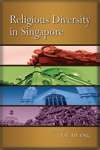
I attended this forum which accompanied the launch of the book of the same name, Religious Diversity in Singapore, which was edited by Lai Ah Eng. It consisted of 3 groups of 2 chapter presentations and one Q&A session each.

I will be almost exclusively summarising (as opposed to commenting on) what was presented. Although a report of what was presented, it will not be written in reported speech; personal comments will be clearly demarcated, like so [Ed: Foo bar].


Session I: The Landscape of Diversity


Religious Trends and Issues in Singapore
Assoc Prof Tong Chee Kiong
Department of Sociology, NUS


Statistics on religion have been collected in Singapore since 1831 (IIRC, or some other early date in the 19th century), with a gap between 1931 and 1980. However, they are somewhat inaccurate - during the census religion is determined by asking the Head of the Household, yet his children may not be of the same religion as he and/or his spouse.

Many self-declared Buddhists are really Taoists, due to the syncretic nature of Chinese religio, yet the number of Taoists has declined over time.

Contrary to the stereotype of Christianity being a young religion, between 1990 and 2000 there was actually a drop in the number of Christians aged 15-24 years. Instead there were many conversions among older people.

Religious Competition characterises the period from 1980-2000. Buddhists proselytised and repackaged their religion as a response to Christianity. The same happened with Taoism, with Taoists saying it wasn't about superstition and reaching out to the English community. This has been part of an intellectualisation of religion, probably due partly to Religious Knowledge being in the school curriculum in the 80s.

Religious diversity is seen mainly among the Chinese, though 65% of Chinese are still Buddhist/Taoist. Most Chinese-educated Chinese are not Christians, but university-educated Chinese are disproportionately so (about 1/3); the percentage of Chinese Christians rises with educational level (interestingly, across races, from the figures I glimpsed, non-religiosity similarly correlates with educational level). Ditto for socio-economic status and housing types - there is a class cleavage in religious belief.

The 2010 census will probably show religious change has stabilised. Christianity and Buddhism will have grown but at a much slower pace. There will probably be a rise in spiritual humanism in Singapore, with the popularity of religious sects emphasising spirituality and not religion. These groups cross ethnic and religious boundaries. For example, Christians might join a neo-Buddhist group because of its commitment to love.


Toleration and Interaction
Prof Ten Chin Liew
Department of Philosophy, NUS


To create and sustain religious diversity, society cannot just talk about common grounds between religions. There is a huge cost to people with religious convictions to endorse people of other religions. It is a fact that there're fundamental differences between different religions, as well as between religious people and atheists.

In recent years there has been a rise in militant atheism. [Ed: This seems to be misdiagnosed, almost entirely because of Richard Dawkins, Sam Harris and Christopher Hitchens' books - but the publishing of books isn't a good sign of popular belief. Furthermore, "militant" atheism, with its unsavory overtones, isn't quite accurate. Advocating a stance is not the same as imposing it on people or persecuting people who don't share it. Sticks and stones may break my bones, but...]

Religion is the basis of many people's identity. It's not fair to keep exploring common ground because sometimes there's no common ground.

In the history of the fight for religious tolerance, people fighting for it were not pluralists or religious relativists (i.e. believing all religions were the same, or as good, or as valid). For example: John Locke and Roger Williams. They were convicted Christians, but preached tolerance. They could accommodate others despite having profound disagreements with them, and thinking their were profoundly wrong (and they themselves right).

Why?

Some version of the Golden Rule was applied; a negative version: "Do not do unto others what you would not have others do to you". Despite disapproving of what others do and believe, they acknowledged that reasonable people can disagree.

I had an Uncle who a relative said went mad. At 2am, when the neighbor's dog barked, he would go to the kitchen and bang on pots. I said he was perfectly sensible - this was an application of the Golden Rule.

So we should go beyond toleration, which is too passive. One's religious and political identities are different. On a political level we can agree with people whose religious values we do not share, and collectively endorse things like meritocracy, and so encourage diversity.


Q&A

Q: Indians are also very diverse. There're Indian Hindus, Muslims and Christians.

Why are you skeptical about finding common religious ground? All great religions have common values.

A: The Chinese are the most diverse. Malays are homogenous. Indians are less diverse, and the big difference is that most Indian conversion happened in India, not in Singapore. >90% of religious conversion (people not being born into the religion they currently have) is among the Chinese.

A: You can find common ground, but the common ground hides vast differences, e.g. on the divinity of Christ, the afterlife. They surface everywhere: family, social relations, biotechnology.

In the 60s a Bishop claimed that the fundamental belief of Christians was shared by non-theists. But if you repudiate Christ and reduce Christianity to ethical beliefs, and a narrow set of them at that, you cannot explain the difference between religions.

A Catholic nun once claimed her religion was the same as the others. He asked her why she was Catholic, then, and she said it was due to historical reasons. He then said she was not Catholic because she did not hold the necessary fundamental beliefs.

Q: The problem is not non-application of the Golden Rule, but monopolisation of power/economic resources and their linkage to religion, e.g. Northern Ireland: Protestants are rich. So you shouldn't identify power with a religious group.

A: You need to provide the opportunity for interests to develop, because religious people have non-religious interests. Link these interests across religions. Religion is not the only centre of one's identity.

Q: Religion and ideology intersect, e.g. some Christians are for social justice and some are right wing. At some point could the divisions become between ideologies within religions rather than just across religions?

A: Laws should not be religiously-based. Lord Devlin pointed out that laws in England were Christian in origin, but they were not currently justified by Christian arguments.

Q: There're Muslims from South Asia and Buddhists from Sri Lanka. Indians in Singapore are diverse.

In spiritual humanism, people increase their areas of faith. There's a trend to atheism. Militant atheism is almost a faith.

It's easier to find common ground in the Abrahamic faiths. We should avoid strife. Dialogue needs authenticity.

A: We should allow religious differences in ideas, but regulate their context to avoid conflict. Don't let aside ideas on who is intrinsically right or wrong.

Popper said that ideas are our troops. They can die, but we survive. We kill others' ideas, but not them.
Related Posts Plugin for WordPress, Blogger...

Latest posts (which you might not see on this page)

powered by Blogger | WordPress by Newwpthemes