SJW fatigue: Why anime & manga are conquering the West
"For a long time, Hollywood and the American comic book
industry have been seen as international media behemoths. It used to be
that they never even faced any serious competition. But lately, they
seem to be losing that grasp. The last decade of film and comics has
seen a sharp decline in quality...
If you’re looking for American comics,
there’s mainly only two publishers producing them – Marvel and DC, which
account for about 80% of the comic book market. Both companies have
been around since the 1930s and have grown into giant corporations that
completely dominate the industry. With numerous wildly successful superhero series, both companies have
also ventured into other forms of media and have proven to be extremely
successful. But while pumping out numerous films, TV shows, games etc,
it seems their core product – comics – has seen a dramatic dip in
quality, readership, and profitability. New issues are predominantly
received as stale, repetitive, outdated, and overwhelmingly
hyper-politicized. Many fans and veterans of the industry feel that
modern comic book writers have seemingly abandoned the basics of what
made the medium successful in the first place – creative and engaging
storylines, memorable, unique, and relatable characters, and stunning
artwork. Instead, new releases focus on the same old superhero tropes,
infused with heavy-handed political messaging and offering little to no
variety.
Chuck Dixon, known for his extensive work on Marvel’s
‘Punisher’ and DC’s ‘Batman’ comics in the 1990s and early 2000s, thinks
it’s no surprise that manga is “wiping the floor” with American comics.
“It’s
not hard to see. The artwork is attractive. It’s different. It’s
engaging. It’s interesting. It’s varied. So there’s a lot of reasons to
like manga. And not a whole lot of reasons to like what’s out now,” he said in response to a fan question on YouTube. “Because
what’s out now, for the Big Two [Marvel and DC], is, for the most part,
poorly crafted. There’s a few exceptions, but for the most part, it’s
poorly crafted, poorly conceived, there’s an obvious political agenda to
everything, and there’s no variety.”
“It’s superheroes,
superheroes, superheroes. And they are all avatars for the writer’s
political agenda. And they’re kind of tiresome. They’re not particularly
well-drawn. They’re not particularly well-realized.”
However, criticism isn’t something that the American comic book giants
seem to appreciate these days, and most gripes with modern comics are
often disregarded as coming from hateful bigots who don’t know better.
As a result, longtime comic book fans have become alienated from their
beloved franchises and turn elsewhere for fulfilling entertainment,
leading many to manga...
The stories are generally told in a straightforward linear fashion,
allowing readers to jump into a new series fairly easily and follow it
from beginning to end. In Western comics, it’s a bit more complicated,
as many of the characters have been around for decades and have gone
through numerous major overhauls and re-boots and have been featured in
numerous side stories, spin-offs, crossovers, and other ‘non-canon’
works, which can be confusing for newcomers.
Perhaps the biggest
difference from American comics, most of which are published by DC and
Marvel and typically focus on superheroes, is that manga is produced by
countless artists (known as mangaka) and released by numerous publishers
ranging from huge conglomerates to small independent print houses. This
results in a wide variety of visual styles, but, more importantly,
provides works in literally every genre, subgenre, and subject matter
imaginable.
Of course, there’s a lot of series about people with
superhuman abilities, but there’s also an endless amount of manga
exploring genres such as comedy, drama, horror, sci-fi, romance,
erotica, fantasy, etc. There are also numerous series about things like
fishing, hunting, golf, racing, ballet, gaming, music, sports, science,
psychology, business, law, politics, crime, war, biographies, history…
the list goes on.
Additionally, mangaka tend to explore other cultures, religions,
countries, and time periods in their works, oftentimes providing a
unique spin on them, further expanding the possibilities for creative
and intriguing stories.
The benefits of such a diverse and creative environment in the manga industry naturally spill over into animation...
One of the underlying reasons for such creative freedom is that Japanese
artists tend to face significantly less regulation compared to their US
counterparts. While mangaka are not really limited in what/who they can
or cannot write about, for US comics, that’s not really the case. Since
the 1950s and until fairly recently, American comic book publishers
have had to adhere to the Comics Code Authority – a self-imposed set of
guidelines created amid a public concern that some content could be
corrupting or traumatizing to young readers. This code ended up wiping
out numerous genres in American comics and severely neutered those that
survived. Today though, most publishers have abandoned the code, but now
they face another, arguably more aggressive, form of informal
censorship – social justice activists.
While DC and Marvel comics certainly feature a diverse cast of
characters and places, in recent years, the creative freedom to explore
certain topics has become severely limited by having to contend with
activists and their campaigns against things like ‘cultural
appropriation’ – which suggests that drawing inspiration from other
cultures is oppressive against minorities. Portraying certain groups and
ideas in the ‘wrong’ light, or not praising others enough, has also
become a trigger for some vocal far-left activists, who immediately
respond with demands for retractions, apologies and cancellations.
Not
only has the American comic book industry been increasingly watching
its creative step because of these groups, but some of the activists
have actually joined its ranks, resulting in what many old-school fans
see as one of the biggest reasons Western movies and comics are failing –
overbearing ‘woke’ progressive politics.
Fiction has always explored politics or had some sort of political
subtext or context, and comics and manga are no exception. There are
certainly political themes and subtext in Japanese manga, but that
doesn’t seem to have a detrimental effect. For the most part, when
politics are included, it’s done rather subtly or in a way that doesn’t
detract from the story, allowing readers to easily ignore it.
Additionally, the types of political messages present in manga are just
as varied as the topics the medium covers. The reason is that Japanese
artists don’t tend to face any social or legal repercussions for
expressing any political position, so there’s really nothing stopping
them from just saying what they think...
Essentially, it’s not that manga and anime don’t have politics in them,
it’s that the works explore political themes, and tastefully integrate
them into the worlds, instead of blatantly preaching political talking
points to the readers/viewers. The political subtext remains just that –
subtext. The messages (where they are present) don’t detract from the
world and story, but instead, add a layer to them and give audiences
food for thought, as most artists seem to prefer letting their stories
speak for themselves, and avoid moral grandstanding over the readers.
Modern American comics, on the other hand, are displaying much less
subtlety and moderation in their political messaging. A lot of the
comics coming out of the US today overtly place politics at the
forefront of their stories and use new or long-established characters as
nothing but vehicles to deliver political talking points.
While
some claim that there is just as much politics in manga as there is in
comics, the key difference is subtlety. Take for example the notoriously
ill-received ‘New Warriors’ by Marvel. Dubbed by many as ‘The Social
Justice League’, the announcement of the new series saw overwhelming
backlash and eye-rolls, as the characters were perceived as the literal
embodiment of woke culture, and the character names only reinforced the
notion, with heroes such as ‘Snowflake’ – Marvel’s first nonbinary
character – and ‘Safespace’, who uses pink forcefields to shield himself
from harm.
In fact, Marvel has launched an entire series specifically dedicated to
delivering modern socio-political issues to its readers titled ‘Marvel’s
Voices’. One of the issues features Spider-Man and Spider-Girl taking
part in a pro-immigrant rally and learning about the term ‘Latinx’ – a
word which progressive white liberals use as a more inclusive way to
refer to people, rather than the gendered terms ‘Latino’or ‘Latina’. In
reality, most Hispanics have never even heard of the term, while many
consider the term offensive, and only 3% use it
to refer to themselves, but the comic doesn’t seem to acknowledge that
fact, instead promoting the term as a ‘more inclusive’ one.
Additionally, both Marvel and DC have been open in their hate towards
former US President Donald Trump, as both publishers have released
comics featuring a parody of Trump, portraying him as a central villain
for the heroes to take down.
Given that Trump
gained nearly half the vote in the 2020 election, it’s clear that there
are many who still support him and will take issue with such portrayals.
Politics in Western comics have essentially become unavoidable, and the
messages come exclusively from the progressive left, leading a large
portion of the audience to become alienated and ditch American comics
altogether...
As audiences grow more frustrated with every major release, the
producers of these adaptations continue to boast about their works being
progressive and ‘diverse’ – which is generally achieved with token
gestures like race- and gender-swapping fan-favorite characters from the
source material.
For example, Netflix’s tendency to race-swap
characters has become a meme unto itself, especially when it comes to
red-haired women, for some reason. Just take the latest ‘Witcher’
adaptation, where the fan-favorite blue-eyed and red-haired Triss
Merigold is portrayed by an actress that couldn’t be any further from
those descriptions, which are found in the books and games...
Everytime Hollywood announces yet another remake or adaptation,
audience expectations seem to be so low, that many just choose to ignore
watching the doomed-to-be-bad remake altogether and go watch/read the
original instead.
Japanese manga and anime aren’t the only ones
stealing the attention of Western audiences. Korean films have also been
gradually growing in popularity around the world. ‘Parasite’ took an
Oscar, ‘Squid Game’ became one of the most-watched Netflix shows ever
and zombie flicks like ‘Train to Busan’ have proven that Korean
filmmakers can go toe-to-toe with their American counterparts in genres
that have traditionally been Hollywood staples.
What makes Korean films so special? Simply the fact that the stories are
creative, well written, well-acted, well shot, and most importantly –
feel authentic, without the need to be preachy or shoving political
propaganda down its viewers’ throats. Sure, most of the Korean films
mentioned above have quite the political and social subtext, but the
characters and plot take precedence, and the films can be enjoyed
without delving into South Korean politics.
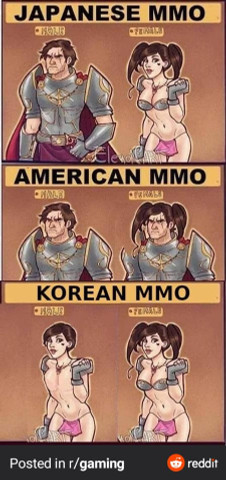
Hollywood and the American comics industry, however, don’t seem to have
caught on to what they’re doing wrong yet. Instead of taking a page out
of the Eastern entertainment industry’s playbook, many Western creators
instead choose to either double down on their failing practices or
criticize Eastern creators. ‘Power Girl’ co-creator Gerry Conway even
called to have mangaka ‘taken to task’ for their supposedly rampant
sexism and misogyny.
The author griped about Western artists being “deservedly taken to task
regularly for outrageously sexist treatment of women” while Japanese
authors were supposedly free to include over-sexalized women in their
works without facing criticism. While the author seems to ignore the
never-ending complaints and boycotts Western activists lodge against
mangaka and their readers, his perspective once again highlights the
difference between West and East. The Western perspective that
sexualized drawings of women are inherently ‘sexist’ and ‘misogynistic’
fails to consider that many of the artists drawing them are women
themselves (and enjoy drawing them that way), and that audiences tend to
prefer attractively illustrated and written characters rather than
asexual chunks of political propaganda. And perhaps in part, that’s yet
another reason more audiences are drawn to manga and anime rather than
the Western ‘politically correct’ productions.
Obviously, all these studios want money, but it seems that most of the
directors, writers, and executives are either out of touch with their
viewers/readers, or honestly believe that social justice warriors on
Twitter are a viable core audience. In either case, instead of changing
course and adapting to the wants of their broader audience, they seem to
prefer churning out remakes and reboots while doubling down on woke
messaging. Criticism and bad viewer ratings, meanwhile, often get
brushed off as coming from people of ‘unacceptable’ political or social
persuasion, be it sexism, racism, or any of the multitude of other -isms
and -phobias on offer."
Clearly Chuck Dixon doesn't know what he's talking about and is ignorant that comics have always been woke and political.