
"Beware of all enterprises that require new clothes." - Henry David Thoreau
***
This is quite a funny cross-examination:
Those payments were love gifts: William Tan
"Dr Chee, a divorcee with three daughters, flatly denied allegations that they had been lovers and insisted that the two had merely had a 'Christian platonic kind of relationship'...
Dr Tan's lawyer, Senior Counsel Jimmy Yim... pointed to e-mail sent by Dr Chee to Dr Tan, which contained terms of endearment such as 'darling' and 'love you always', as evidence of the relationship. Her response: She used similar terms with other friends.
In one e-mail, she talked about living together in a big house 'with grandchildren running around'. Her reply: She was referring to her grandchildren, not theirs.
Another said: 'You are priceless. You deserve everything on earth. You are marvellous. You are my hero.' Her reply: He was indeed admired by many Singaporeans.
Mr Yim asserted that they first became 'intimate' in her office in 2000, and later went to hotels where she footed the bills - which she vehemently denied. He also pointed to a birthday card sent to Dr Tan in 2000, in which her youngest daughter referred to Dr Tan as 'daddy'.
Dr Chee replied that her daughter did so only because she knew Dr Tan could not have children due to his disability and pitied him.
Mr Yim, noting that the girl was then just 10 years old, remarked: 'I have to compliment your daughter for her precocious understanding.'"
In other news, I didn't know William Tan Kian Meng was not a Medical Doctor in 1999.
According to Bright Happy Power™, he was a PhD holder at the time.

L'origine de Bert
Saturday, March 20, 2010
Friday, March 19, 2010
Singapore: not the only Kafka-esque country in Southeast Asia
"When a large Thai brokerage polled fund managers about political risk factors in 2010, 42% of respondents chose what the brokerage describes as "a change that cannot be mentioned""


Post ID: 4328461665298274529
"What if this is it?"

"what if this is it?"
At first I thought this was a Christian banner ad.
In any case, it sounds suitably dodgy, so my initial guess was not too far off.
Post ID: 3715875227939383835
Thursday, March 18, 2010
Links - 18th March 2010
"The human mind treats a new idea the same way the body treats a strange protein; it rejects it." - P. B. Medawar
***
Forehead Tittaes w/ Marion Cotillard (link updated) - "In America, anything is possible. It is the land of opportunity, a place where dreams come true. But women in America must still deal with sexual objectification... French women have known for centuries that to earn a man's respect, you must make him look you in the eyes.
Introducing Forehead Tittaes by Janae: France's best-kept secret. Lab tests prove that Forehead Tittaes actually redirect the male gaze from the chest to the general area of the brain... earns their respect without sacrificing your femininity"
Cocaine users 'making global warming worse' - "We were horrified to learn for every few lines of cocaine snorted in a London club, four square metres of rainforest is destroyed"
This is ridiculous, considering that "For each hamburger that originated from animals raised on rainforest land, approximately 55 square feet of forest have been destroyed"
Professional couch potato wanted: get paid to do nothing and eat more junk food - "It will pay almost £24,000 to a "worker" with a big appetite who is happy to eat 400 extra calories every day in high fat meals such as chips and pizzas, to test the fat binding properties of a weight loss product"
Hot cross buns banned for fear of offence - "Tower Hamlets, Liverpool, York and Wolverhampton have stopped serving them for fear that they could provoke protests from Muslim, Hindu or Jewish students or their parents. It is the first time that councils, rather than individual schools, have taken steps to ensure that hot cross buns are not served to pupils... Iqbal Sacranie, Secretary-General of the Muslim Council of Britain, said that the decisions were “very bizarre”, particularly when Britain was about to go to war. He said that the bans were an attempt to respect religious sensitivities, but it was “taking things a bit too far”. Serving hot cross buns was “not very serious” and was not likely to offend Muslims, Mr Sacranie said. Ann Widdecombe, the Conservative MP, said: “It’s not as if eating a hot cross bun automatically makes you a born-again Christian.” "
........... This was in the same year (2003) that books with stories about pigs were banned
The lives of the Lehman ladies - "The one woman who rose to the top, Erin Callan, was a beneficiary of a passion Joe Gregory developed, relatively late in the day, at promoting diversity at Lehman. Callan, a Harvard graduate born to a New York cop, was a fighter. But she did herself no favours at Lehman, Ward says, by coming to work in low-cut, short dresses that would have been more suitable to a cocktail party. Callan’s looks were often the subject of morning inter-office e-mails, until she found herself struggling to hold her head above water when the markets started to turn. “Her biggest mistake was to accept a job [chief financial officer] she was not up to,” Ward says. “Joe Gregory had no business in appointing her”"
Maybe Lehman Brothers and Sisters would not have been such a good idea after all.
The Cove, Dolphins, and Mercury - "Mercury poisoning is scary, but it is only one amongst a long and growing list of toxicological concern... if you’re a woman who is or may become pregnant or a child, avoid shark, swordfish, king mackerel, and tilefish... avoiding dolphin is best for your neurons. But primary reason to stop the fishery? Perhaps not. It hasn’t shut down swordfish, shark, tilefish, or tuna yet"
Thailand Police Don Smiley Masks: Ha, Ha… Wha? - "“They have to put on a mask because a smile doesn’t come naturally anymore… These past few years that smile has worn thin because we are all angry at each other and willing to show it,” says economist, Ammar Siamwalla. Recently, Abac, a leading polling agency, spent three days questioning more than 2,000 people in the Bangkok area only to discover that on a scale of 1 to 10, people gave Thailand only 5.77 points for being the “Land of Smiles”"
'Gay' police horse case dropped - "Police have stood by their decision to take Sam Brown to court for making "homophobic comments" despite the Crown Prosecution Service dropping the case. Mr Brown, 21, a student at Oxford University, had said to an officer: "Excuse me, do you realise your horse is gay?" Police took the case to court after Mr Brown refused to pay a £80 fine. Mr Brown, who made the comment during a night out with friends in Oxford after his final exams, was arrested under section 5 of the Public Order Act for making homophobic remarks. His remarks were deemed likely to cause harassment, alarm or distress"
Let no one be spared in the battle against bigotry!
Is there a spell to become a mermaid that actually works? - Yahoo! Answers - "Q: Don't say things like "mermaids don't exist" because I take it very seriously and i find it offensive... BTW. I am also a witch
A: Enter a small pond or lake with a mask that allows you to speak similar to ones that divers wear (mermaids can survive in salt or fresh water.) Once you submerge you must begin to chant "let my power surge and fly, through the sea and the sky, take my form and let it be, free to roam the endless sea" Once you said this three times, you should remove your mask. Once removed, deeply inhale the water. At first you will feel like your drowning, this is to be expected. Once your lungs are full of water they will begin to transmute to gills. Be warned, if you surface when this is happening, the process will reverse itself. Best of luck! :D"
Another person: "What you are about to read is absolute truth, and anyone seriously interested in knowing the real answer to a question should never be offended by the truth."
Would more women in Catholic Church reduce abuse? - ""It is clear that, statistically, women abuse much less than men. And in terms of reporting, are much more likely to (report abuse)" ... Janet Smith, chair of life ethics at Sacred Heart Major Seminary in Detroit [said] "Women can be Christ-like as well as any man, but we wouldn't choose a woman to play the role of Hamlet, right?" She added that women play a big role in the structure of the Catholic Church, holding 23 percent of the top "power positions" in the United States, 48 percent of the administrative positions and 80 percent of all paid positions. Jones, however, said those statistics were meaningless as long as women cannot be priests. "We have women that are running all sorts of things, but they are not allowed in the most important position of all, which is the priesthood." Smith countered: "I disagree that the priesthood is the most important position in the church. Every human soul has the obligation to seek holiness. And the power that the true Catholic wants is the power to serve as Christ served.""
Man used penis to assault female police officer - "The accused got to his feet and was standing over the police officer exposing his penis and thrusting it in her face, forcing her to take evasive action to avoid getting struck"
***
Forehead Tittaes w/ Marion Cotillard (link updated) - "In America, anything is possible. It is the land of opportunity, a place where dreams come true. But women in America must still deal with sexual objectification... French women have known for centuries that to earn a man's respect, you must make him look you in the eyes.
Introducing Forehead Tittaes by Janae: France's best-kept secret. Lab tests prove that Forehead Tittaes actually redirect the male gaze from the chest to the general area of the brain... earns their respect without sacrificing your femininity"
Cocaine users 'making global warming worse' - "We were horrified to learn for every few lines of cocaine snorted in a London club, four square metres of rainforest is destroyed"
This is ridiculous, considering that "For each hamburger that originated from animals raised on rainforest land, approximately 55 square feet of forest have been destroyed"
Professional couch potato wanted: get paid to do nothing and eat more junk food - "It will pay almost £24,000 to a "worker" with a big appetite who is happy to eat 400 extra calories every day in high fat meals such as chips and pizzas, to test the fat binding properties of a weight loss product"
Hot cross buns banned for fear of offence - "Tower Hamlets, Liverpool, York and Wolverhampton have stopped serving them for fear that they could provoke protests from Muslim, Hindu or Jewish students or their parents. It is the first time that councils, rather than individual schools, have taken steps to ensure that hot cross buns are not served to pupils... Iqbal Sacranie, Secretary-General of the Muslim Council of Britain, said that the decisions were “very bizarre”, particularly when Britain was about to go to war. He said that the bans were an attempt to respect religious sensitivities, but it was “taking things a bit too far”. Serving hot cross buns was “not very serious” and was not likely to offend Muslims, Mr Sacranie said. Ann Widdecombe, the Conservative MP, said: “It’s not as if eating a hot cross bun automatically makes you a born-again Christian.” "
........... This was in the same year (2003) that books with stories about pigs were banned
The lives of the Lehman ladies - "The one woman who rose to the top, Erin Callan, was a beneficiary of a passion Joe Gregory developed, relatively late in the day, at promoting diversity at Lehman. Callan, a Harvard graduate born to a New York cop, was a fighter. But she did herself no favours at Lehman, Ward says, by coming to work in low-cut, short dresses that would have been more suitable to a cocktail party. Callan’s looks were often the subject of morning inter-office e-mails, until she found herself struggling to hold her head above water when the markets started to turn. “Her biggest mistake was to accept a job [chief financial officer] she was not up to,” Ward says. “Joe Gregory had no business in appointing her”"
Maybe Lehman Brothers and Sisters would not have been such a good idea after all.
The Cove, Dolphins, and Mercury - "Mercury poisoning is scary, but it is only one amongst a long and growing list of toxicological concern... if you’re a woman who is or may become pregnant or a child, avoid shark, swordfish, king mackerel, and tilefish... avoiding dolphin is best for your neurons. But primary reason to stop the fishery? Perhaps not. It hasn’t shut down swordfish, shark, tilefish, or tuna yet"
Thailand Police Don Smiley Masks: Ha, Ha… Wha? - "“They have to put on a mask because a smile doesn’t come naturally anymore… These past few years that smile has worn thin because we are all angry at each other and willing to show it,” says economist, Ammar Siamwalla. Recently, Abac, a leading polling agency, spent three days questioning more than 2,000 people in the Bangkok area only to discover that on a scale of 1 to 10, people gave Thailand only 5.77 points for being the “Land of Smiles”"
'Gay' police horse case dropped - "Police have stood by their decision to take Sam Brown to court for making "homophobic comments" despite the Crown Prosecution Service dropping the case. Mr Brown, 21, a student at Oxford University, had said to an officer: "Excuse me, do you realise your horse is gay?" Police took the case to court after Mr Brown refused to pay a £80 fine. Mr Brown, who made the comment during a night out with friends in Oxford after his final exams, was arrested under section 5 of the Public Order Act for making homophobic remarks. His remarks were deemed likely to cause harassment, alarm or distress"
Let no one be spared in the battle against bigotry!
Is there a spell to become a mermaid that actually works? - Yahoo! Answers - "Q: Don't say things like "mermaids don't exist" because I take it very seriously and i find it offensive... BTW. I am also a witch
A: Enter a small pond or lake with a mask that allows you to speak similar to ones that divers wear (mermaids can survive in salt or fresh water.) Once you submerge you must begin to chant "let my power surge and fly, through the sea and the sky, take my form and let it be, free to roam the endless sea" Once you said this three times, you should remove your mask. Once removed, deeply inhale the water. At first you will feel like your drowning, this is to be expected. Once your lungs are full of water they will begin to transmute to gills. Be warned, if you surface when this is happening, the process will reverse itself. Best of luck! :D"
Another person: "What you are about to read is absolute truth, and anyone seriously interested in knowing the real answer to a question should never be offended by the truth."
Would more women in Catholic Church reduce abuse? - ""It is clear that, statistically, women abuse much less than men. And in terms of reporting, are much more likely to (report abuse)" ... Janet Smith, chair of life ethics at Sacred Heart Major Seminary in Detroit [said] "Women can be Christ-like as well as any man, but we wouldn't choose a woman to play the role of Hamlet, right?" She added that women play a big role in the structure of the Catholic Church, holding 23 percent of the top "power positions" in the United States, 48 percent of the administrative positions and 80 percent of all paid positions. Jones, however, said those statistics were meaningless as long as women cannot be priests. "We have women that are running all sorts of things, but they are not allowed in the most important position of all, which is the priesthood." Smith countered: "I disagree that the priesthood is the most important position in the church. Every human soul has the obligation to seek holiness. And the power that the true Catholic wants is the power to serve as Christ served.""
Man used penis to assault female police officer - "The accused got to his feet and was standing over the police officer exposing his penis and thrusting it in her face, forcing her to take evasive action to avoid getting struck"
Post ID: 391620287506817931
Wednesday, March 17, 2010
My calibrated scale of tourism destinations
Tim the Great asked me how Macau was (I have finally downloaded the pictures and have started deleting duplicates and renaming them), so I presented a calibrated scale of tourism destinations:
jakarta - 1
god forsaken village at the top of a hill in crete - 2 [Ed: Ethia]
malaysia - 3
hong kong - 4
macau - 5
vilnius - 6
talinn - 7
amsterdam - 8
rome - 9
japan - 10
jakarta - 1
god forsaken village at the top of a hill in crete - 2 [Ed: Ethia]
malaysia - 3
hong kong - 4
macau - 5
vilnius - 6
talinn - 7
amsterdam - 8
rome - 9
japan - 10
Post ID: 3616008850568894594
Tuesday, March 16, 2010
Chatroulette fun
Chatroulette fun:
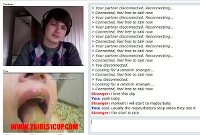
"i love this clip
moment i will start to masturbate"

"i love this clip
moment i will start to masturbate"
Post ID: 95418037797386855
The cost of allowing Men who have Sex with Men to donate blood
"When a man is wrapped up in himself, he makes a pretty small package." - John Ruskin
***
The cost of allowing Men who have Sex with Men to donate blood
In a discussion on blood donation, it was said that excluding Men who have Sex with Men (MSM) from donating blood was not only discriminatory, but a waste of blood.
I said that the relative cost of allowing MSM to donate blood was high, and the relative benefit was low, and was countered with some atrocious calculations ("Out of the 3% gays, maybe 1 % have HIV. Meaning you eliminated 3% of 1% which is 0.03% comtanimated donations. This you call a high benefit ? 0.03% savings ? This is about 12 cents of €413.93. There must be hundreds of other ways to save the 12 cents.")
So, here is a calculation of the economics of banning MSM from donating blood (see below for the link to the Excel, which you can play around with).

(see below for justification of the assumptions, and a discussion of what happens when you change the variables)
In short, although the cost per clean packet of blood only rises from $801.40 to $802.65 if we allow MSM to donate, we know that economics teaches us that what is important is the marginal impact. And here, we see that the cost per additional packet of blood you get is $854.70, which is about a 7% premium. I confess that this is not as much as I expected, but coupled with safety reasons (see below) is provides additional reasons to keep the ban on MSM donating blood.
The calculation above assumes that the screening measures to keep the blood of infected non-MSM out of the system are ineffective (see: The Top 52 Reasons for Not Being Able to Donate Blood). To account for the measures, you can change the value of the "HIV infection rate in population" variable, since in the calculations it really represents the infection rate of the sample of blood donors, rather than the population as a whole, but this doesn't change the qualitative result, and the cost per additional packet from allowing MSM to donate blood doesn't change much anyway.
More importatly, this economic calculation does not take into account safety - there is a window period of 3-6 months during which HIV tests may give a false negative, i.e. saying that a person (or, in this case, blood sample) is clean although the person actually has HIV. This is a consideration because allowing men who have not had sex with men for a year to donate blood (we do the same for those who have visited prostitutes more than a year ago, or have had sex with a MSM more than a year ago) would not be acceptable to those who campaign for the ban on MSM blood donation to be lifted, since this would still discriminate against sexually active gay men (i.e. the vast majority of them).
Assumptions:
1) The cost per unit of blood donated is $800 (Kanavos, Yfantopoulos, Vandoros and Politis conservatively estimated that a unit of blood transfused cost between €294.83 and €413.93)
2) We have 10,000 blood donors (a priori assumption)
3) The sex ratio of blood donors is even (Different studies reported different things, but varying the sex ratio doesn't change the results for the cost of allowing MSM to donate blood, though it does affect the number of additional packets you will get. More importantly, I was lazy to change the ratio after doing my reporting)
4) 5% of males are MSM (this is a rough median of various figures I found; again, the relative cost does not change when this variable is changed, though the number of additional packets does)
5) The HIV infection rate in the population is 0.2% and 6.7% in the MSM population; the US population is 300 million, and the US Centers for Disease Control and Prevention's March 2010 newsletter reports that "MSM account for nearly half of the more than one million people living with HIV in the U.S. (48%, or an estimated 532,000 total persons)". Tweaking the variables gives similar results to the results reported earlier.
If you want to play with the variables (or check my formulae), you can download the Excel.
***
The cost of allowing Men who have Sex with Men to donate blood
In a discussion on blood donation, it was said that excluding Men who have Sex with Men (MSM) from donating blood was not only discriminatory, but a waste of blood.
I said that the relative cost of allowing MSM to donate blood was high, and the relative benefit was low, and was countered with some atrocious calculations ("Out of the 3% gays, maybe 1 % have HIV. Meaning you eliminated 3% of 1% which is 0.03% comtanimated donations. This you call a high benefit ? 0.03% savings ? This is about 12 cents of €413.93. There must be hundreds of other ways to save the 12 cents.")
So, here is a calculation of the economics of banning MSM from donating blood (see below for the link to the Excel, which you can play around with).

(see below for justification of the assumptions, and a discussion of what happens when you change the variables)
In short, although the cost per clean packet of blood only rises from $801.40 to $802.65 if we allow MSM to donate, we know that economics teaches us that what is important is the marginal impact. And here, we see that the cost per additional packet of blood you get is $854.70, which is about a 7% premium. I confess that this is not as much as I expected, but coupled with safety reasons (see below) is provides additional reasons to keep the ban on MSM donating blood.
The calculation above assumes that the screening measures to keep the blood of infected non-MSM out of the system are ineffective (see: The Top 52 Reasons for Not Being Able to Donate Blood). To account for the measures, you can change the value of the "HIV infection rate in population" variable, since in the calculations it really represents the infection rate of the sample of blood donors, rather than the population as a whole, but this doesn't change the qualitative result, and the cost per additional packet from allowing MSM to donate blood doesn't change much anyway.
More importatly, this economic calculation does not take into account safety - there is a window period of 3-6 months during which HIV tests may give a false negative, i.e. saying that a person (or, in this case, blood sample) is clean although the person actually has HIV. This is a consideration because allowing men who have not had sex with men for a year to donate blood (we do the same for those who have visited prostitutes more than a year ago, or have had sex with a MSM more than a year ago) would not be acceptable to those who campaign for the ban on MSM blood donation to be lifted, since this would still discriminate against sexually active gay men (i.e. the vast majority of them).
Assumptions:
1) The cost per unit of blood donated is $800 (Kanavos, Yfantopoulos, Vandoros and Politis conservatively estimated that a unit of blood transfused cost between €294.83 and €413.93)
2) We have 10,000 blood donors (a priori assumption)
3) The sex ratio of blood donors is even (Different studies reported different things, but varying the sex ratio doesn't change the results for the cost of allowing MSM to donate blood, though it does affect the number of additional packets you will get. More importantly, I was lazy to change the ratio after doing my reporting)
4) 5% of males are MSM (this is a rough median of various figures I found; again, the relative cost does not change when this variable is changed, though the number of additional packets does)
5) The HIV infection rate in the population is 0.2% and 6.7% in the MSM population; the US population is 300 million, and the US Centers for Disease Control and Prevention's March 2010 newsletter reports that "MSM account for nearly half of the more than one million people living with HIV in the U.S. (48%, or an estimated 532,000 total persons)". Tweaking the variables gives similar results to the results reported earlier.
If you want to play with the variables (or check my formulae), you can download the Excel.
Post ID: 9136024283096227519
Sexism in Singapore Law - "Slander of women"
Section 509 of the Penal Code (Word or gesture intended to insult the modesty of a woman) is bad enough, but someone draws my attention to Section 4 of the Defamation Act:
"Slander of women.
4. Words spoken and published which impute unchastity or adultery to any woman or girl shall not require special damage to render them actionable."
Well done.
"Slander of women.
4. Words spoken and published which impute unchastity or adultery to any woman or girl shall not require special damage to render them actionable."
Well done.
Post ID: 2239441937300704978
The Unbearable Accuracy of Stereotypes
"To knock a thing down, especially if it is cocked at an arrogant angle, is a deep delight of the blood." - George Santayana
***
Strongly supporting my observation that "stereotypes persist and endure because they are often true":
"The tacit equation is, if stereotypes are associated with social wrongs, they must be factually wrong. However, the accuracy of stereotypes is an empirical question, not an ideological one. For those of us who care deeply about stereotypes, prejudice, and social harmony, getting to the truth of these collective cognitions should guide inquiry about them.
Unfortunately, this has not always been our experience. Because of his inquiries into stereotype accuracy, the first author has been accused by prominent social psychologists of purseying “nonsense,” of living “in a world where stereotypes are all accurate and no one ever relies on them anyway,” of calling for research with titles like “Are Jews really cheap?” and “Are Blacks really lazy?,” of disagreeing with civil rights laws, and of providing intellectual cover for bigots...
To argue for the need to take seriously the possibility that sometimes, some aspects of some stereotypes may have some degree of accuracy, therefore, is to risk making claims that are unbearable to some social scientists. However, science is about validity, not “bearability.” It is about logic and evidence...
No social scientist has ever explicitly claimed that all beliefs about all groups are inaccurate. Thus, toppling the assertion that all stereotypes are inaccurate might appear to be refuting a straw assertion. Unfortunately, however, this straw assertion, even if it is merely an implicit rather than explicit assertion, appears to have an ardent scientific following. For decades, stereotypes were predominantly defined as inaccurate, with virtually no evidence demonstrating inaccuracy. Furthermore, among those who define stereotypes as inaccurate, statements regarding what sort of beliefs about groups are accurate (and, therefore, not stereotypes, almost never appear... Accurate beliefs about groups, therefore, appeared to be an empty set.
Furthermore, in their empirical studies, the social sciences have considered people’s beliefs about almost any attribute (personality, behavior, attitudes, criminality, competence, demographics) regarding almost any type of group (in addition to race, sex, class, occupation, dorm residence, sorority membership, college major, and many more to he a stereotype. It seems, then, that for all practical purposes, the social sciences consider any and all claims and beliefs about groups to be stereotypes...
So little of the stereotype research has assessed the accuracy of the beliefs under investigation...
[We can't define stereotypes as inaccurate beliefs about groups since] almost [no social psychology "research purportedly addressing sereotypes"] has empirically established that the beliefs about groups being studied are in fact erroneous. There would be nothing left—no studies of the role of “stereotypes’ in expectancy effects, self-fulfilling prophecies, person perception, subtyping, memory, and so on. Poof! We would have to throw out the baby, the bathwater, the tub, the bathroom, and indeed tear down the entire scientific and empirical house in which all our current understanding of "stereotypes" exists...
Fortunately, many modern definitions of stereotypes do not define stereotypes as inherently inaccurate, and are instead agnostic in terms of stereotype accuracy. One of the simplest of these definitions, and the one we use throughout this chapter, was provided by Ashmore and Del Boca (198l) who stated that 'a stereotype is a set of beliefs about the personal attributes of a social group' (p. 21). Stereotypes, as defined by Ashmore and Del Boca, may or may not be accurate and rational, widely shared, conscious, rigid, exaggerations of group differences, positive or negative, or based on essentialist or biological rationales. Stereotypes may or may not be the cause or the effect of prejudice, or the cause of biases and self-fulfilling prophecies...
Stereotype accuracy issues occur, therefore, at two different levels of analysis. each captured by a different question. First, how accurate are people's beliefs about groups? Just as a person might not accurately remember how many games Roger Clemens won in 2010 (inaccuracy in person perception) and still remember that the Yankees won the World Series that year (accurate belief about Clemens’s group), inappropriate application of a stereotype does not mean that the stereotype is itself inaccurate. A person may correctly know that, on average, women earn about 70% of what men earn, but have no accurate knowledge whatsoever about how much Nancy earns.
Second, does people’s use or disuse of stereotypes in judging individuals increase or reduce the accuracy with which they perceive differences between small groups of individuals with whom they have personally come into contact? This is the accuracy version of the “stereotypes and person perception" question. Do, for example, general stereotypes of male superiority in athletics lead the coach of a soccer team to erroneously view the particular boys on the team as better than the particular girls on the team, when they really have equal skill?...
How much correspondence [between stereotypes and reality] should be considered “accurate”?... we adocate holding people to a high standard—the same standards to which social scientists hold themselves.
J. Cohen (1988), in his classic statistical treatise imploring social scientists to examine the size of the effects they obtained in their studies and not just the “statistical significance” of the results, suggested that effect sizes above .8 could be considered "large.” Such an effect size translates into a correlation of about .4... By this standard, correlations of .4 and higher could be considered accurate because they represent a “large” correspondence between stereotype and reality.
This standard has been supported by two recent studies that have examined the typical effect sizes found in clinical and social psychological research. One recent review of more than 300 meta—analyses - which included more than 25,000 studies and over 8 million human participants — found that mean and median effect sizes in social psychological research were both about .2 (Richard et al., 2003). Only 24% of social psychological effects exceeded .3. A similar pattern has been found for the phenomena studied by clinical psychologists (Hemphill. 2003). Psychological research rarely obtains effect sizes exceeding correlations of 3. Effect sizes of .4 and higher, therefore, constitute a strong standard for accuracy. Last, according to Rosenthal’s (1991) binomial effect size display, a correlation of at least .4 roughly translates into people being right at least 70% of the time. This means they are right more than twice as often as they are wrong. That seems like an appropriate cutoff for considering a stereotype reasonably accurate...
Consensual stereotype discrepancies are a mix of accurate and inaccurate beliefs. Nonetheless, most judgments were either accurate or near misses. Only a minority were more than 20% off...people’s consensual stereotype discrepancies for between group differences are consistently more accurate than are their consensual stereotype discrepancies for characteristics within groups... these results provide little support for the idea that stereotypes typically exaggerate real differences. Exaggeration occurred, but it occurred no more often than did underestimation... the extent to which people’s stereotypes corresponded with reality was strikingly high. Consensual stereotype accuracy correlations ranged from .53 to .93. Personal stereotype accuracy correlations were somewhat lower, but still quite high by any standard, ranging from .36 to .69... [For gender stereotypes] results are broadly consistent with those for ethnic and racial stereotypes...
Addendum: Although most of the studies only assessed the accuracy of undergraduates' stereotypes, several assessed the accuracy of samples of adults. Some of the highest levels of accuracy occured with these adult samples, suggesting that the levels of accuracy obtained do not represent some artifact resulting from the disproportionate study of undergraduate samples...
The studies examined a wide range of stereotypes: beliefs about demographic characteristics, academic achievement, and personality and behavior. The consistency of the results across studies, therefore, does not reflect some artifact resulting from the study of a particular type of stereotype...
Despite the impressive and surprising evidence of the accuracy of stereotypes, there is some consistent evidence of inaccuracy in stereotypes. In the United States, political stereotypes tend to have little accuracy (e.g.. Judd & Park. 1993). Many people in the United States seem to have little knowledge or understanding of the beliefs, attitudes, and policy positions of Democrats and Republicans.
A recent large-scale study conducted in scores of countries found that there is also little evidence of accuracy in national stereotypes regarding personality... somewhat more surprising is that people from cultures with a great deal of contact (various Western European countries: Britain and the United States) also have highly inaccurate beliefs about one another’s personality characteristics...
What happens when people rely on a largely accurate stereotype to judge an individual? Given that the prior section demonstrated moderate to high accuracy in many stereotype beliefs, this becomes a pressing question. It turns out that there are some conditions under which relying on an accurate stereotype can increase accuracy in judging an individual...
Consider stereotypes of peace activists and al-Qaeda members. You hear the same thing about an individual from each group: They have “attacked” the United States. Should you interpret this to mean that they engaged in identical behaviors. Not likely. The attack perpetrated by the peace activist is most likely a verbal “attack” on U.S. war policies; the al Qaeda attack is probably something far more lethal.
The same principles hold regardless of whether the stereotypes inolve groups for whom stereotypes are deemed acceptable (e.g.. peace activists or al Qaeda or groups for whom stereotypes are deemed socially unacceptable (e.g. genders, nationalities, races, social classes, religions, ethnicities, etc.). For example, if we learn both Bob and Barb are regarded as “tall,” should we conclude that they are exactly equal in height? Of course not. Undoubtedly. Bob is tall for a man, and Barb is tall for a woman, and, because men are, on average, taller than women, tall means different objective heights for men and women...
What about judgments about more socially charged attributes, such as intelligence, motivation, assertiveness, social skill, hostility, and so on? The same principles apply. If the stereotype is accurate and one only has a small bit of ambiguous information about an individual, using the stereotype as a basis for judging the person will likely enhance accuracy. For the statistically inclined, this is a very basic application of Bayes’s theorem and principles of regression. Let's assume for a moment that 30% of motorcycle gang members are arrested for violent behavior at some point in their lives, and 0.3% of ballerinas are arrested for violent behavior at some point in their lives. People who know this are being completely reasonable and rational if, on dark streets or at lonely train stations, they avoid the bikers more than ballerinas, in the absence of much other individuating information about them.
In all of these cases, the stereotype “biases” the subsequent judgments. At least, that is how such influences have nearly always been interpreted in empirical social psychological research on stereotypes. It is probably more appropriate, however, to characterise such phenomena as stereotypes "influencing” or “informing” judgments. Such effects mean that people are appropriately using their knowledge about groups to reach as informed a judgment as possible under difficult and information-poor circumstances. If their knowledge is reasonably accurate, relying on the stereotype will usually increase, rather than decrease, the accuracy of those judgments (see also Jussim, 1991, 2005).
If you are given absolutely no information, and are asked to predict today’s high temperature in Anchorage and New York, what should you do? If you know anything about the climate in the two cities, you will predict that it will be warmer in New York. Indeed, you should predict this every time you are asked to do so. Would this mean your beliefs about climate are somehow irrationally and rigidly resistant to change? Ot course not...
People should primarily use individuating information, when it is available, rather than stereotypes when judging others. Do they? This area of research has been highly controversial...
Fortunately, literally hundreds of studies have now been performed that address this issue, and, even more fortunately, multiple meta-analyses have been performed summarizing their results...
The effects of stereotypes on person judgments, averaged over hundreds of experiments, range from 0 to .25. The simple arithmetic mean of the effect sizes is .10, which is an overestimate...
How small is an effect of r = .10? It is small according to J. Cohen’s (1988) heuristic categorization of effect sizes. It is among the smallest effects found in social psychology (Richard et al.. 2003). An overall effect of .10 means that expectancies substantially influence social perceptions about 5% of the time. This means that stereotypes do not influence perceptions 95% of the time...
There is always the possibility that researchers have not searched in the right places or in the right way for powerful stereotype biases in person perception. At minimum, however, the burden of proof for the existence of widespread, powerful stereotype biases in person perception has shifted to those emphasizing such powerful biases...
People seem to be generally doing the right thing—relying on individuating information far more than stereotypes...
Madon et al. (1998) examined the accuracy of seventh-grade teachers’ perceptions of their students’ performance, talent, and effort at math... teachers were mostly accurate. The correlation between teachers’ perceived group differences and actual group differences was r = .71. The teachers’ perceptions of sex differences in effort, however, were highly inaccurate—they believed girls exerted more effort than boys, but there was no sex difference in self—reported motivation and effort. When this outlier was removed, the correlation between perceived and actual group differences increased to r = .96.
We are aware of only two other studies that have addressed whether people systematically and unjustifiably favor or disparage individuals belonging to certain groups. Both yielded evidence of accuracy accompanied by small bias...
The utility of an accurate stereotype was also demonstrated by Brodt and Ross (1998). College students made predictions about the behaviors and preferences of other college students who lived in one of two dormitories. The students in the "preppie" dorm were widely seen as politically conservative, wealthy, and conventional. The students in the “hippie” dorm were widely seen as politically left wing with unconventional practices and preferences. Perceivers (other students who did not live in either dorm) viewed photographs of individual targets, were informed of each target’s dorm, and then made predictions about each target’s behaviors and attitudes. Perceivers’ predictions were then compared to the targets self-reports on these same preferences and attitudes.
When perceivers predicted targets to be consistent with their dorm (for a preppie dorm resident to have preppie attributes or for a hippie dorm resident to have hippie attributes), 66% of their predictions were correct (they matched the targets self-reports). When perceivers jettisoned their dorm stereotypes, and predicted targets to be inconsistent with their dorm, 43% of their predictions were correct. Relying on the preppie—hippie dorm stereotypes enhanced the accuracy of person perception predictions...
Ethnic and Gender Stereotypes Are More Valid Than Most Social Psychological Hypotheses...
First, the accuracy of two of the other major types of stereotypes—religion and social class—have, as far as we know, never been examined. Although we can think of no reason why patterns of accuracy should differ for these types of groups. we will never know until the research is actually conducted.
Second, the existing research has overwhelmingly examined the stereotypes held by college students, largely because those samples are convenient. Is this important? Maybe. Suggesting it may not be that important has been the research by McCauley and colleagues, and by Clahaugh and Morling (2004) showing that the accuracy of noncollege groups is nearly identical to that of college students. Nonetheless, more research with noncollege samples is needed...
Fourth, most of the research on stereotype accuracy to date has been conducted in the United States and Canada. Perhaps stereotypes in other countries are less (or more) accurate...
People are better at judging differences between groups, and at judging the rank order of attributes within a group, than they are at judging the exact level of particular attributes within a group... [people] either consistently over- or underestimate the level of an attribute in a group...
[Ed: This is the same reason we use ordinal, not cardinal, utility]
On average, personal stereotypes corresponded well with groups’ attributes (i.e., individual beliefs about groups correlated moderately to highly with criteria). Nonetheless, some personal stereotypes were highly inaccurate. Nearly all of the studies reporting personal stereotype accuracy correlations found at least some people with very low—near zero—correlations...
Ideology/motivated egalitarianism/universalism (which, despite the intended benevolence of an egalitarian ideology, seems to lead people to hold less accurate stereotypes - Wolsko et al., 2000). Despite the existing evidence showing only weak relations between prejudice and stereotyping (Park & Judd. 2005), perhaps under the right (or wrong) conditions, deeply held prejudices and hostilities can sometimes lead to highly distorted stereotypes...
Education and mass communication levels are so high in the United States and Canada, where most of the stereotype accuracy research has been conducted, that, perhaps, in general, people are more exposed to social reality in these places (and, probably, in other Western democracies) than in many other places around the world. Perhaps poverty and ignorance help breed stronger inaccurate stereotypes. Perhaps the propaganda of demagogues in authoritarian regimes helps perpetuate inaccurate stereotypes...
Stereotypes can be accurate. Some scholars and lay people resist this conclusion, believing that crediting any accuracy to stereotypes is tantamount to endorsing prejudice. We argue that the opposite is more likely true—that acknowledging the accuracy of some stereotypes provides the episiemological clarity needed to more effectively address prejudice and bigotry, and to more effectively investigate the nature, causes, and moderators of stereotypes.
Not all stereotypes are accurate, and those that are inaccurate may be the most damaging. A special and important case is that of manufactured stereotypes, which are intentionally designed to despoil the reputation of particular social groups... [like] the perpetual stereotype of Jews as seeking world domination...
Whereas Jews do not seek world domination, it is not always absurd to believe that certain groups seek domination over, if not quite thc world, at least large parts of it (consider. e.g., Rome. Nazis, Communists, Imperial Japan, the Mongolian Khans, and, possibly, some modern Islamic extremists, etc.). Without standards and methods for assessing (in)accuracy, it becomes impossible to reliably sort out valid from bogus beliefs...
Stereotypes are not static phenomenon, but shift with circumstance, policy, social contact, and other forces. To what degree do stereotypes map these changes? How responsive are the to social shifts, or to targeted interventions? Why do some stereotypes shift rapidly and others remain entrenched? Perhaps not surprisingly, if one makes the common assumption that stereotypes are inaccurate, and answers these questions by assumption, one is not likely to even consider such questions, let alone provide answers to them...
In sum, accepting that stereotypes can sometimes be accurate provides the means to distinguish innocent errors from motivated bigotry, assess the efficacy of efforts to correct inaccurate stereotypes, and reach a more coherent scientific understanding of stereotypes. We believe that this proposition can advance the depth, scope, and validity of scientific research on stereotypes, and thereby help improve intergroup relations."
--- The Unbearable Accuracy of Stereotypes in Handbook of prejudice, stereotyping, and discrimination / Lee Jussim, Thomas R. Cain, Jarret T. Crawford, Kent Harber, Florette Cohen
In summary:
- Stereotypes are mostly accurate, regardless of how you measure accuracy
- Stereotypes are accurate regardless of who holds them
- Many types of stereotypes are accurate
- Stereotypes aren't usually exaggerated and don't usually lead to exaggeration
- The stereotypes most people believe are the most accurate
Ed:
- People start with stereotypes but as they get more information about an individual they abandon the stereotypes and use the more-relevant individuating information in evaluating the individual
Addendum: Truth, lies and stereotypes: when scientists ignore evidence
"Typically, when people have clear, definitive, relevant information, they rely on that information almost exclusively. Indeed, reliance on personal characteristics, rather than stereotypes, is up there with stereotype accuracy as one of the largest and most replicable effects in social psychology. Some 20 years ago, when social psychologist Ziva Kunda and philosopher Paul Thagard tabulated all the studies they could find that addressed this issue, they concluded effects of unique, personal characteristics on judgments were massive. The effects of stereotypes in such situations are small to nonexistent. On the other hand, when personal information is absent, or ambiguous, people do rely on their stereotypes, although even in these situations, stereotype biases are not very large"
***
Strongly supporting my observation that "stereotypes persist and endure because they are often true":
"The tacit equation is, if stereotypes are associated with social wrongs, they must be factually wrong. However, the accuracy of stereotypes is an empirical question, not an ideological one. For those of us who care deeply about stereotypes, prejudice, and social harmony, getting to the truth of these collective cognitions should guide inquiry about them.
Unfortunately, this has not always been our experience. Because of his inquiries into stereotype accuracy, the first author has been accused by prominent social psychologists of purseying “nonsense,” of living “in a world where stereotypes are all accurate and no one ever relies on them anyway,” of calling for research with titles like “Are Jews really cheap?” and “Are Blacks really lazy?,” of disagreeing with civil rights laws, and of providing intellectual cover for bigots...
To argue for the need to take seriously the possibility that sometimes, some aspects of some stereotypes may have some degree of accuracy, therefore, is to risk making claims that are unbearable to some social scientists. However, science is about validity, not “bearability.” It is about logic and evidence...
No social scientist has ever explicitly claimed that all beliefs about all groups are inaccurate. Thus, toppling the assertion that all stereotypes are inaccurate might appear to be refuting a straw assertion. Unfortunately, however, this straw assertion, even if it is merely an implicit rather than explicit assertion, appears to have an ardent scientific following. For decades, stereotypes were predominantly defined as inaccurate, with virtually no evidence demonstrating inaccuracy. Furthermore, among those who define stereotypes as inaccurate, statements regarding what sort of beliefs about groups are accurate (and, therefore, not stereotypes, almost never appear... Accurate beliefs about groups, therefore, appeared to be an empty set.
Furthermore, in their empirical studies, the social sciences have considered people’s beliefs about almost any attribute (personality, behavior, attitudes, criminality, competence, demographics) regarding almost any type of group (in addition to race, sex, class, occupation, dorm residence, sorority membership, college major, and many more to he a stereotype. It seems, then, that for all practical purposes, the social sciences consider any and all claims and beliefs about groups to be stereotypes...
So little of the stereotype research has assessed the accuracy of the beliefs under investigation...
[We can't define stereotypes as inaccurate beliefs about groups since] almost [no social psychology "research purportedly addressing sereotypes"] has empirically established that the beliefs about groups being studied are in fact erroneous. There would be nothing left—no studies of the role of “stereotypes’ in expectancy effects, self-fulfilling prophecies, person perception, subtyping, memory, and so on. Poof! We would have to throw out the baby, the bathwater, the tub, the bathroom, and indeed tear down the entire scientific and empirical house in which all our current understanding of "stereotypes" exists...
Fortunately, many modern definitions of stereotypes do not define stereotypes as inherently inaccurate, and are instead agnostic in terms of stereotype accuracy. One of the simplest of these definitions, and the one we use throughout this chapter, was provided by Ashmore and Del Boca (198l) who stated that 'a stereotype is a set of beliefs about the personal attributes of a social group' (p. 21). Stereotypes, as defined by Ashmore and Del Boca, may or may not be accurate and rational, widely shared, conscious, rigid, exaggerations of group differences, positive or negative, or based on essentialist or biological rationales. Stereotypes may or may not be the cause or the effect of prejudice, or the cause of biases and self-fulfilling prophecies...
Stereotype accuracy issues occur, therefore, at two different levels of analysis. each captured by a different question. First, how accurate are people's beliefs about groups? Just as a person might not accurately remember how many games Roger Clemens won in 2010 (inaccuracy in person perception) and still remember that the Yankees won the World Series that year (accurate belief about Clemens’s group), inappropriate application of a stereotype does not mean that the stereotype is itself inaccurate. A person may correctly know that, on average, women earn about 70% of what men earn, but have no accurate knowledge whatsoever about how much Nancy earns.
Second, does people’s use or disuse of stereotypes in judging individuals increase or reduce the accuracy with which they perceive differences between small groups of individuals with whom they have personally come into contact? This is the accuracy version of the “stereotypes and person perception" question. Do, for example, general stereotypes of male superiority in athletics lead the coach of a soccer team to erroneously view the particular boys on the team as better than the particular girls on the team, when they really have equal skill?...
How much correspondence [between stereotypes and reality] should be considered “accurate”?... we adocate holding people to a high standard—the same standards to which social scientists hold themselves.
J. Cohen (1988), in his classic statistical treatise imploring social scientists to examine the size of the effects they obtained in their studies and not just the “statistical significance” of the results, suggested that effect sizes above .8 could be considered "large.” Such an effect size translates into a correlation of about .4... By this standard, correlations of .4 and higher could be considered accurate because they represent a “large” correspondence between stereotype and reality.
This standard has been supported by two recent studies that have examined the typical effect sizes found in clinical and social psychological research. One recent review of more than 300 meta—analyses - which included more than 25,000 studies and over 8 million human participants — found that mean and median effect sizes in social psychological research were both about .2 (Richard et al., 2003). Only 24% of social psychological effects exceeded .3. A similar pattern has been found for the phenomena studied by clinical psychologists (Hemphill. 2003). Psychological research rarely obtains effect sizes exceeding correlations of 3. Effect sizes of .4 and higher, therefore, constitute a strong standard for accuracy. Last, according to Rosenthal’s (1991) binomial effect size display, a correlation of at least .4 roughly translates into people being right at least 70% of the time. This means they are right more than twice as often as they are wrong. That seems like an appropriate cutoff for considering a stereotype reasonably accurate...
Consensual stereotype discrepancies are a mix of accurate and inaccurate beliefs. Nonetheless, most judgments were either accurate or near misses. Only a minority were more than 20% off...people’s consensual stereotype discrepancies for between group differences are consistently more accurate than are their consensual stereotype discrepancies for characteristics within groups... these results provide little support for the idea that stereotypes typically exaggerate real differences. Exaggeration occurred, but it occurred no more often than did underestimation... the extent to which people’s stereotypes corresponded with reality was strikingly high. Consensual stereotype accuracy correlations ranged from .53 to .93. Personal stereotype accuracy correlations were somewhat lower, but still quite high by any standard, ranging from .36 to .69... [For gender stereotypes] results are broadly consistent with those for ethnic and racial stereotypes...
Addendum: Although most of the studies only assessed the accuracy of undergraduates' stereotypes, several assessed the accuracy of samples of adults. Some of the highest levels of accuracy occured with these adult samples, suggesting that the levels of accuracy obtained do not represent some artifact resulting from the disproportionate study of undergraduate samples...
The studies examined a wide range of stereotypes: beliefs about demographic characteristics, academic achievement, and personality and behavior. The consistency of the results across studies, therefore, does not reflect some artifact resulting from the study of a particular type of stereotype...
Despite the impressive and surprising evidence of the accuracy of stereotypes, there is some consistent evidence of inaccuracy in stereotypes. In the United States, political stereotypes tend to have little accuracy (e.g.. Judd & Park. 1993). Many people in the United States seem to have little knowledge or understanding of the beliefs, attitudes, and policy positions of Democrats and Republicans.
A recent large-scale study conducted in scores of countries found that there is also little evidence of accuracy in national stereotypes regarding personality... somewhat more surprising is that people from cultures with a great deal of contact (various Western European countries: Britain and the United States) also have highly inaccurate beliefs about one another’s personality characteristics...
What happens when people rely on a largely accurate stereotype to judge an individual? Given that the prior section demonstrated moderate to high accuracy in many stereotype beliefs, this becomes a pressing question. It turns out that there are some conditions under which relying on an accurate stereotype can increase accuracy in judging an individual...
Consider stereotypes of peace activists and al-Qaeda members. You hear the same thing about an individual from each group: They have “attacked” the United States. Should you interpret this to mean that they engaged in identical behaviors. Not likely. The attack perpetrated by the peace activist is most likely a verbal “attack” on U.S. war policies; the al Qaeda attack is probably something far more lethal.
The same principles hold regardless of whether the stereotypes inolve groups for whom stereotypes are deemed acceptable (e.g.. peace activists or al Qaeda or groups for whom stereotypes are deemed socially unacceptable (e.g. genders, nationalities, races, social classes, religions, ethnicities, etc.). For example, if we learn both Bob and Barb are regarded as “tall,” should we conclude that they are exactly equal in height? Of course not. Undoubtedly. Bob is tall for a man, and Barb is tall for a woman, and, because men are, on average, taller than women, tall means different objective heights for men and women...
What about judgments about more socially charged attributes, such as intelligence, motivation, assertiveness, social skill, hostility, and so on? The same principles apply. If the stereotype is accurate and one only has a small bit of ambiguous information about an individual, using the stereotype as a basis for judging the person will likely enhance accuracy. For the statistically inclined, this is a very basic application of Bayes’s theorem and principles of regression. Let's assume for a moment that 30% of motorcycle gang members are arrested for violent behavior at some point in their lives, and 0.3% of ballerinas are arrested for violent behavior at some point in their lives. People who know this are being completely reasonable and rational if, on dark streets or at lonely train stations, they avoid the bikers more than ballerinas, in the absence of much other individuating information about them.
In all of these cases, the stereotype “biases” the subsequent judgments. At least, that is how such influences have nearly always been interpreted in empirical social psychological research on stereotypes. It is probably more appropriate, however, to characterise such phenomena as stereotypes "influencing” or “informing” judgments. Such effects mean that people are appropriately using their knowledge about groups to reach as informed a judgment as possible under difficult and information-poor circumstances. If their knowledge is reasonably accurate, relying on the stereotype will usually increase, rather than decrease, the accuracy of those judgments (see also Jussim, 1991, 2005).
If you are given absolutely no information, and are asked to predict today’s high temperature in Anchorage and New York, what should you do? If you know anything about the climate in the two cities, you will predict that it will be warmer in New York. Indeed, you should predict this every time you are asked to do so. Would this mean your beliefs about climate are somehow irrationally and rigidly resistant to change? Ot course not...
People should primarily use individuating information, when it is available, rather than stereotypes when judging others. Do they? This area of research has been highly controversial...
Fortunately, literally hundreds of studies have now been performed that address this issue, and, even more fortunately, multiple meta-analyses have been performed summarizing their results...
The effects of stereotypes on person judgments, averaged over hundreds of experiments, range from 0 to .25. The simple arithmetic mean of the effect sizes is .10, which is an overestimate...
How small is an effect of r = .10? It is small according to J. Cohen’s (1988) heuristic categorization of effect sizes. It is among the smallest effects found in social psychology (Richard et al.. 2003). An overall effect of .10 means that expectancies substantially influence social perceptions about 5% of the time. This means that stereotypes do not influence perceptions 95% of the time...
There is always the possibility that researchers have not searched in the right places or in the right way for powerful stereotype biases in person perception. At minimum, however, the burden of proof for the existence of widespread, powerful stereotype biases in person perception has shifted to those emphasizing such powerful biases...
People seem to be generally doing the right thing—relying on individuating information far more than stereotypes...
Madon et al. (1998) examined the accuracy of seventh-grade teachers’ perceptions of their students’ performance, talent, and effort at math... teachers were mostly accurate. The correlation between teachers’ perceived group differences and actual group differences was r = .71. The teachers’ perceptions of sex differences in effort, however, were highly inaccurate—they believed girls exerted more effort than boys, but there was no sex difference in self—reported motivation and effort. When this outlier was removed, the correlation between perceived and actual group differences increased to r = .96.
We are aware of only two other studies that have addressed whether people systematically and unjustifiably favor or disparage individuals belonging to certain groups. Both yielded evidence of accuracy accompanied by small bias...
The utility of an accurate stereotype was also demonstrated by Brodt and Ross (1998). College students made predictions about the behaviors and preferences of other college students who lived in one of two dormitories. The students in the "preppie" dorm were widely seen as politically conservative, wealthy, and conventional. The students in the “hippie” dorm were widely seen as politically left wing with unconventional practices and preferences. Perceivers (other students who did not live in either dorm) viewed photographs of individual targets, were informed of each target’s dorm, and then made predictions about each target’s behaviors and attitudes. Perceivers’ predictions were then compared to the targets self-reports on these same preferences and attitudes.
When perceivers predicted targets to be consistent with their dorm (for a preppie dorm resident to have preppie attributes or for a hippie dorm resident to have hippie attributes), 66% of their predictions were correct (they matched the targets self-reports). When perceivers jettisoned their dorm stereotypes, and predicted targets to be inconsistent with their dorm, 43% of their predictions were correct. Relying on the preppie—hippie dorm stereotypes enhanced the accuracy of person perception predictions...
Ethnic and Gender Stereotypes Are More Valid Than Most Social Psychological Hypotheses...
First, the accuracy of two of the other major types of stereotypes—religion and social class—have, as far as we know, never been examined. Although we can think of no reason why patterns of accuracy should differ for these types of groups. we will never know until the research is actually conducted.
Second, the existing research has overwhelmingly examined the stereotypes held by college students, largely because those samples are convenient. Is this important? Maybe. Suggesting it may not be that important has been the research by McCauley and colleagues, and by Clahaugh and Morling (2004) showing that the accuracy of noncollege groups is nearly identical to that of college students. Nonetheless, more research with noncollege samples is needed...
Fourth, most of the research on stereotype accuracy to date has been conducted in the United States and Canada. Perhaps stereotypes in other countries are less (or more) accurate...
People are better at judging differences between groups, and at judging the rank order of attributes within a group, than they are at judging the exact level of particular attributes within a group... [people] either consistently over- or underestimate the level of an attribute in a group...
[Ed: This is the same reason we use ordinal, not cardinal, utility]
On average, personal stereotypes corresponded well with groups’ attributes (i.e., individual beliefs about groups correlated moderately to highly with criteria). Nonetheless, some personal stereotypes were highly inaccurate. Nearly all of the studies reporting personal stereotype accuracy correlations found at least some people with very low—near zero—correlations...
Ideology/motivated egalitarianism/universalism (which, despite the intended benevolence of an egalitarian ideology, seems to lead people to hold less accurate stereotypes - Wolsko et al., 2000). Despite the existing evidence showing only weak relations between prejudice and stereotyping (Park & Judd. 2005), perhaps under the right (or wrong) conditions, deeply held prejudices and hostilities can sometimes lead to highly distorted stereotypes...
Education and mass communication levels are so high in the United States and Canada, where most of the stereotype accuracy research has been conducted, that, perhaps, in general, people are more exposed to social reality in these places (and, probably, in other Western democracies) than in many other places around the world. Perhaps poverty and ignorance help breed stronger inaccurate stereotypes. Perhaps the propaganda of demagogues in authoritarian regimes helps perpetuate inaccurate stereotypes...
Stereotypes can be accurate. Some scholars and lay people resist this conclusion, believing that crediting any accuracy to stereotypes is tantamount to endorsing prejudice. We argue that the opposite is more likely true—that acknowledging the accuracy of some stereotypes provides the episiemological clarity needed to more effectively address prejudice and bigotry, and to more effectively investigate the nature, causes, and moderators of stereotypes.
Not all stereotypes are accurate, and those that are inaccurate may be the most damaging. A special and important case is that of manufactured stereotypes, which are intentionally designed to despoil the reputation of particular social groups... [like] the perpetual stereotype of Jews as seeking world domination...
Whereas Jews do not seek world domination, it is not always absurd to believe that certain groups seek domination over, if not quite thc world, at least large parts of it (consider. e.g., Rome. Nazis, Communists, Imperial Japan, the Mongolian Khans, and, possibly, some modern Islamic extremists, etc.). Without standards and methods for assessing (in)accuracy, it becomes impossible to reliably sort out valid from bogus beliefs...
Stereotypes are not static phenomenon, but shift with circumstance, policy, social contact, and other forces. To what degree do stereotypes map these changes? How responsive are the to social shifts, or to targeted interventions? Why do some stereotypes shift rapidly and others remain entrenched? Perhaps not surprisingly, if one makes the common assumption that stereotypes are inaccurate, and answers these questions by assumption, one is not likely to even consider such questions, let alone provide answers to them...
In sum, accepting that stereotypes can sometimes be accurate provides the means to distinguish innocent errors from motivated bigotry, assess the efficacy of efforts to correct inaccurate stereotypes, and reach a more coherent scientific understanding of stereotypes. We believe that this proposition can advance the depth, scope, and validity of scientific research on stereotypes, and thereby help improve intergroup relations."
--- The Unbearable Accuracy of Stereotypes in Handbook of prejudice, stereotyping, and discrimination / Lee Jussim, Thomas R. Cain, Jarret T. Crawford, Kent Harber, Florette Cohen
In summary:
- Stereotypes are mostly accurate, regardless of how you measure accuracy
- Stereotypes are accurate regardless of who holds them
- Many types of stereotypes are accurate
- Stereotypes aren't usually exaggerated and don't usually lead to exaggeration
- The stereotypes most people believe are the most accurate
Ed:
- People start with stereotypes but as they get more information about an individual they abandon the stereotypes and use the more-relevant individuating information in evaluating the individual
Addendum: Truth, lies and stereotypes: when scientists ignore evidence
"Typically, when people have clear, definitive, relevant information, they rely on that information almost exclusively. Indeed, reliance on personal characteristics, rather than stereotypes, is up there with stereotype accuracy as one of the largest and most replicable effects in social psychology. Some 20 years ago, when social psychologist Ziva Kunda and philosopher Paul Thagard tabulated all the studies they could find that addressed this issue, they concluded effects of unique, personal characteristics on judgments were massive. The effects of stereotypes in such situations are small to nonexistent. On the other hand, when personal information is absent, or ambiguous, people do rely on their stereotypes, although even in these situations, stereotype biases are not very large"
Post ID: 3681780244126149325
Monday, March 15, 2010
Links - 15th March 2010
"The capacity of human beings to bore one another seems to be vastly greater than that of any other animal." - H. L. Mencken
***
School cancels prom over fear of lesbians
Cute animals are just as delicious as ugly ones - "It is Canada’s annual seal cull again, and the animal rights protesters are preparing their traditional response. Yet they are strangely silent about the rat genocide in South Georgia, where millions of non-indigenous rodents will be killed over the next five years. If you prick a rat, does it not bleed? The EU has banned the import of seal produce, much to the fury of some Canadians. Why ban seal skins and not fur? How can the home of foie gras and veal crates complain about smoked seal loin? Our relationship with animals and food in this era of plenty is riven with hypocrisy. There are only two intellectually coherent positions on meat — extreme veganism or enthusiastic carnivorism. But the middle position seems to dominate popular thought; a mishmash of sentiment and wishful thinking. It’s the cute-arianism position — I’ll eat meat, but only from animals that don’t make me go aah"
One comment: "If we human beings did not produce our food in a factory like manner, a substantial portion of us would be dead"
Addendum: Withthe Times firewall, here's a mirror in The Australian
Dutch nurses: Care does not include sex - "A union representing Dutch nurses will launch a national campaign Friday against demands for sexual services by patients who claim it should be part of their standard care"
Avoidr - "Avoidr uses Foursquare to check where your not-friends are so you can avoid them."
Get your chatroulette on - A study on chatroulette: "I broke these 90 people into 3 categories: boys, girls, and perverts... There were 71% guys, 15% girls, and 14% - in the middle of the workday, mind you - were perverts... I was nexted by 19 out of 20 people, in an average time of 2.9 seconds. One out of 20 actually talked to me... At first I took it personally, but then after I got comfortable nexting people, I realised I would definitely next me too I really only pause on pretty girls. So for the next phase of my study, I called my friend Genevieve, who is a really pretty girl... 9/10 people talked to Genevieve, for a minimum of 2 minutes or until she nexted them. It was really amazing. Most everyone was nice to her... This really hot Icelandic girl offered to show her boobs... Then to conclude the study, I joined Genevieve. 'Everybody's nexting us now'"
Freud, Fraud and Sexual Health - "Freud supported his conclusions with only six full case studies. Some of the patients were not even his... Freud did not, in fact, produce dramatic cures in these cases... 'Professor Crews argues that Freud devised a self-validating method of inquiry, deluded himself about his patients' illnesses, and failed to cure them. He founded a doctrinaire movement that has excommunicated dissenters while trying to evade empirical scrutiny'"
Sigmund Freud-- January 6, 1999 - "Freud used rules of interpretation that were much too lax and circular. I'll give you an example. He had concepts at his disposal such as resistance and denial and reaction formation, and these concepts enabled him to take a statement by a patient that seemed to contradict his theories and simply to appropriate it as a corroboration of his theories. Well, if you play by these rules, obviously, you can prove anything any time... he misrepresented the outcome of the majority of his cases... when he spoke to the general public about psychoanalysis, he called it successful in the most triumphant terms. And now that we have many more of his letters and private papers to look at, we can see that he never believed that himself. He was simply lying... People who feel resentful of science found that psychoanalysis was a kind of rival science that they could understand, and it stood against all of this arid materialism. Psychoanalysis gave us a kind of secular church in which people who had lost their religious faith could still have a confessional, could still believe in original sin, namely, infantile sexuality, and could feel superior to other people because they had a deeper, darker insight"
dhamma musings: So Can Killing Sometimes Be Justified? - "Q: What will be or would be the kammic consequences of killing a bet bug or some other insect?
A: Why not try metta (loving-kindness) meditation to protect yourself and them at the same time? Metta should be the first approach and killing the absolute last. It is said that no insects ever trouble the Buddha because of his strong metta, which is gentle yet commanding of respect. When I was on a tropical island known for its huge mosquitoes for three months, I did not get bitten once, while most of others did. I did practise metta then.
[For termites and killer wasps which enter your home and threat you and your family] you can send thoughts of loving-kindness to the insects and persuade them to leave. It does work. I have tried it for a few hundred insect ‘invaders’ myself. For termites, I suggest removal of the affected parts of the house or even the insects one by one. Let’s all practise Metta harder. Time for less rationalization for killing and more practice to avoid killing."
Human-Animal Relationship of Owners of Normal and Overweight Cats -- Kienzle and Bergler 136 (7): 1947S -- Journal of Nutrition - "It was not possible to achieve a similar distribution of gender, because the majority of cat owners were females... Thirty percent of owners of overweight cats compared with 12% of owners of normal cats stated that they did not feel very happy prior to acquiring a cat, and the cat was intended to console and encourage them. These results are suggestive of 1) a closer relationship between overweight cats and their owners than between normal cats and their owners, 2) more over-humanization of overweight cats than of normal cats, 3) a potential role of overweight cats as a substitute for human companions... Playing with the cat appears to be an effective counterbalance against overweight... When asked how the owners perceived the body condition of their cats, only a small percentage readily indicated that their cat was overweight. The majority preferred euphemisms like a little bit too big, or did not perceive or admit anything extraordinary about the weight of their cat."
MAS: Financial Database - Exchange Rates
SGD-Foreign currency exchange rates for 23 currencies (Daily, Weekly, Monthly, Yearly)
How Real are the Defects in Toyota's Cars? - "Consumer advocates... were all too happy to imply that Toyota didn't care how many people it killed as long as they made a profit... In the original Sudden Acceleration Incident craze that afflicted America in the late eighties, the National Highway Safety Transportation Administration eventually ruled that the problem was "pedal misapplication", aka stepping on the gas when you meant to step on the brake. These incidents were highly correlated with three things: being elderly, being short, and parking (or leaving a parking space)... the age distribution really is extremely skewed. The overwhelming majority are over 55... Here's what else you notice: a slight majority of the incidents involved someone either parking, pulling out of a parking space, in stop and go traffic, at a light or stop sign . . . in other words, probably starting up from a complete stop... Obviously, most people are going to err on the side of believing that the car was at fault, rather than a beloved relative"
Something to be said for Japan's gray zone - "Why does Japan so often smudge the good/evil divide? Typical Japanese sentiment seems to accept the shadier parts of our psyche, reminding me of Jung's many admonishments against suppressing the shadow side... I have to be careful on the train in Japan, glancing down at a stranger's newspaper. I could easily glimpse a nude schoolgirl or other offensive photo, propped open on the lap of an innocent-looking salaryman sitting right in between a dozing grandmother and a pregnant mother. I have learned not to judge this salaryman. In the West, certain things are labeled "wrong"; in Japan, it's not so clear. Perhaps Japan's wide swath of gray proves more honest and practical than a clear-cut avowal of wrong and right"
Excuse me... she's a model? - "I WAS livid when I read about Jack Neo's affair. I don't know him or his wife personally, nor do I have any opinions about his dalliances. But, please, can we not call his mistress, Wendy Chong, a "model"? Beauty may be in the eye of the beholder, but mine could not behold any in the published photos of this "freelance model"... When it comes to mistresses, Jack's tastes mirror his movies: Heartland. Wendy and her deluded sisterhood of "freelance models" are one of the reasons that the Singapore modelling industry is in the doldrums... The only "model" who should be worried is Ris Low, because someone else is now poised to take over those 15 minutes of fame - or should it be shame?"
***
School cancels prom over fear of lesbians
Cute animals are just as delicious as ugly ones - "It is Canada’s annual seal cull again, and the animal rights protesters are preparing their traditional response. Yet they are strangely silent about the rat genocide in South Georgia, where millions of non-indigenous rodents will be killed over the next five years. If you prick a rat, does it not bleed? The EU has banned the import of seal produce, much to the fury of some Canadians. Why ban seal skins and not fur? How can the home of foie gras and veal crates complain about smoked seal loin? Our relationship with animals and food in this era of plenty is riven with hypocrisy. There are only two intellectually coherent positions on meat — extreme veganism or enthusiastic carnivorism. But the middle position seems to dominate popular thought; a mishmash of sentiment and wishful thinking. It’s the cute-arianism position — I’ll eat meat, but only from animals that don’t make me go aah"
One comment: "If we human beings did not produce our food in a factory like manner, a substantial portion of us would be dead"
Addendum: Withthe Times firewall, here's a mirror in The Australian
Dutch nurses: Care does not include sex - "A union representing Dutch nurses will launch a national campaign Friday against demands for sexual services by patients who claim it should be part of their standard care"
Avoidr - "Avoidr uses Foursquare to check where your not-friends are so you can avoid them."
Get your chatroulette on - A study on chatroulette: "I broke these 90 people into 3 categories: boys, girls, and perverts... There were 71% guys, 15% girls, and 14% - in the middle of the workday, mind you - were perverts... I was nexted by 19 out of 20 people, in an average time of 2.9 seconds. One out of 20 actually talked to me... At first I took it personally, but then after I got comfortable nexting people, I realised I would definitely next me too I really only pause on pretty girls. So for the next phase of my study, I called my friend Genevieve, who is a really pretty girl... 9/10 people talked to Genevieve, for a minimum of 2 minutes or until she nexted them. It was really amazing. Most everyone was nice to her... This really hot Icelandic girl offered to show her boobs... Then to conclude the study, I joined Genevieve. 'Everybody's nexting us now'"
Freud, Fraud and Sexual Health - "Freud supported his conclusions with only six full case studies. Some of the patients were not even his... Freud did not, in fact, produce dramatic cures in these cases... 'Professor Crews argues that Freud devised a self-validating method of inquiry, deluded himself about his patients' illnesses, and failed to cure them. He founded a doctrinaire movement that has excommunicated dissenters while trying to evade empirical scrutiny'"
Sigmund Freud-- January 6, 1999 - "Freud used rules of interpretation that were much too lax and circular. I'll give you an example. He had concepts at his disposal such as resistance and denial and reaction formation, and these concepts enabled him to take a statement by a patient that seemed to contradict his theories and simply to appropriate it as a corroboration of his theories. Well, if you play by these rules, obviously, you can prove anything any time... he misrepresented the outcome of the majority of his cases... when he spoke to the general public about psychoanalysis, he called it successful in the most triumphant terms. And now that we have many more of his letters and private papers to look at, we can see that he never believed that himself. He was simply lying... People who feel resentful of science found that psychoanalysis was a kind of rival science that they could understand, and it stood against all of this arid materialism. Psychoanalysis gave us a kind of secular church in which people who had lost their religious faith could still have a confessional, could still believe in original sin, namely, infantile sexuality, and could feel superior to other people because they had a deeper, darker insight"
dhamma musings: So Can Killing Sometimes Be Justified? - "Q: What will be or would be the kammic consequences of killing a bet bug or some other insect?
A: Why not try metta (loving-kindness) meditation to protect yourself and them at the same time? Metta should be the first approach and killing the absolute last. It is said that no insects ever trouble the Buddha because of his strong metta, which is gentle yet commanding of respect. When I was on a tropical island known for its huge mosquitoes for three months, I did not get bitten once, while most of others did. I did practise metta then.
[For termites and killer wasps which enter your home and threat you and your family] you can send thoughts of loving-kindness to the insects and persuade them to leave. It does work. I have tried it for a few hundred insect ‘invaders’ myself. For termites, I suggest removal of the affected parts of the house or even the insects one by one. Let’s all practise Metta harder. Time for less rationalization for killing and more practice to avoid killing."
Human-Animal Relationship of Owners of Normal and Overweight Cats -- Kienzle and Bergler 136 (7): 1947S -- Journal of Nutrition - "It was not possible to achieve a similar distribution of gender, because the majority of cat owners were females... Thirty percent of owners of overweight cats compared with 12% of owners of normal cats stated that they did not feel very happy prior to acquiring a cat, and the cat was intended to console and encourage them. These results are suggestive of 1) a closer relationship between overweight cats and their owners than between normal cats and their owners, 2) more over-humanization of overweight cats than of normal cats, 3) a potential role of overweight cats as a substitute for human companions... Playing with the cat appears to be an effective counterbalance against overweight... When asked how the owners perceived the body condition of their cats, only a small percentage readily indicated that their cat was overweight. The majority preferred euphemisms like a little bit too big, or did not perceive or admit anything extraordinary about the weight of their cat."
MAS: Financial Database - Exchange Rates
SGD-Foreign currency exchange rates for 23 currencies (Daily, Weekly, Monthly, Yearly)
How Real are the Defects in Toyota's Cars? - "Consumer advocates... were all too happy to imply that Toyota didn't care how many people it killed as long as they made a profit... In the original Sudden Acceleration Incident craze that afflicted America in the late eighties, the National Highway Safety Transportation Administration eventually ruled that the problem was "pedal misapplication", aka stepping on the gas when you meant to step on the brake. These incidents were highly correlated with three things: being elderly, being short, and parking (or leaving a parking space)... the age distribution really is extremely skewed. The overwhelming majority are over 55... Here's what else you notice: a slight majority of the incidents involved someone either parking, pulling out of a parking space, in stop and go traffic, at a light or stop sign . . . in other words, probably starting up from a complete stop... Obviously, most people are going to err on the side of believing that the car was at fault, rather than a beloved relative"
Something to be said for Japan's gray zone - "Why does Japan so often smudge the good/evil divide? Typical Japanese sentiment seems to accept the shadier parts of our psyche, reminding me of Jung's many admonishments against suppressing the shadow side... I have to be careful on the train in Japan, glancing down at a stranger's newspaper. I could easily glimpse a nude schoolgirl or other offensive photo, propped open on the lap of an innocent-looking salaryman sitting right in between a dozing grandmother and a pregnant mother. I have learned not to judge this salaryman. In the West, certain things are labeled "wrong"; in Japan, it's not so clear. Perhaps Japan's wide swath of gray proves more honest and practical than a clear-cut avowal of wrong and right"
Excuse me... she's a model? - "I WAS livid when I read about Jack Neo's affair. I don't know him or his wife personally, nor do I have any opinions about his dalliances. But, please, can we not call his mistress, Wendy Chong, a "model"? Beauty may be in the eye of the beholder, but mine could not behold any in the published photos of this "freelance model"... When it comes to mistresses, Jack's tastes mirror his movies: Heartland. Wendy and her deluded sisterhood of "freelance models" are one of the reasons that the Singapore modelling industry is in the doldrums... The only "model" who should be worried is Ris Low, because someone else is now poised to take over those 15 minutes of fame - or should it be shame?"
Post ID: 4467804494778052125
Plus c'est la meme chose
"Donc, tant que cela ne sera pas fait, il n’y a aucun signe à espérer, le reste c’est du vent, hein."
Post ID: 8187950746542825605
Sunday, March 14, 2010
Gender differences in liking for Horseriding
"Writing is not necessarily something to be ashamed of, but do it in private and wash your hands afterwards." - Robert Heinlein
***
On why more girls than boys like riding:
"There is one striking exception to the second law of animal appeal and that concerns the horse. The response to this animal is unusual in two ways. When analysed against increase in age of children, it shows a smooth rise in popularity followed by an equally smooth fall. The peak coincides with the onset of puberty. When analysed against the different sexes, it emerges that it is three times as popular with girls as with boys. No other animal love shows anything approaching this sex difference. Clearly there is something unusual about the response to the horse and it requires separate consideration.
The unique feature of the horse in the present context is that it is something to be mounted and ridden. This applies to none of the other top ten animals. If we couple this observation with the facts that its popularity peak coincides with puberty and that there is a strong sexual difference in its appeal, we are forced to the conclusion that the response to the horse must involve a strong sexual element. If a symbolic equation is being made between mounting a horse and sexual mounting, then it is perhaps surprising that the animal has a greater appeal for girls. But the horse is a powerful, muscular and dominant animal and is therefore more suited to the male role. Viewed objectively, the act of horse-riding consists of a long series of rhythmic movements with the legs wide apart and in close contact with the body of the animal. Its appeal for girls appears to result from the combination of its masculinity and the nature of the posture and actions performed on its back. It must be stressed here that we are dealing with the child population as a whole. One child in every eleven preferred the horse to all other animals. Only a small fraction of this percentage would ever actually own a pony or a horse. Those that do, quickly learn the many more, varied rewards that go with this activity. If, as a result, they become addicted to horse-riding, this is not, of course, necessarily significant in the context we have been discussing.)
It remains to explain the fall in popularity of the horse following puberty. With increasing sexual development, it might be expected to show further increases in popularity, rather than a decrease. The answer can be found by comparing the graph for horse love with the curve for sex play in children. They match one another remarkably well. It would seem that, with the growth of sexual awareness, and the characteristic sense of privacy that comes to surround teenage sexual feelings, the response to the horse declines along with the decline in overt sex-play 'romping'. It is significant here that the appeal of monkeys also suffers a decline at this point. Many monkeys have particularly obtrusive sexual organs, including large, pink, sexual swellings. For the younger child these have no significance and the monkeys' other powerful anthropomorphic features can operate unhindered. But for older children the conspicuous genitals become a source of embarrassment and the popularity of these animals suffers as a consequence."
--- The Naked Ape / Desmond Morris
This doesn't seem very convincing, but it's amusing anyway.
Another theory put forward to me today was that girls like ponies, while boys want to be knights.
But since the weapons are taken away, horses lose their appeal to boys.
***
On why more girls than boys like riding:
"There is one striking exception to the second law of animal appeal and that concerns the horse. The response to this animal is unusual in two ways. When analysed against increase in age of children, it shows a smooth rise in popularity followed by an equally smooth fall. The peak coincides with the onset of puberty. When analysed against the different sexes, it emerges that it is three times as popular with girls as with boys. No other animal love shows anything approaching this sex difference. Clearly there is something unusual about the response to the horse and it requires separate consideration.
The unique feature of the horse in the present context is that it is something to be mounted and ridden. This applies to none of the other top ten animals. If we couple this observation with the facts that its popularity peak coincides with puberty and that there is a strong sexual difference in its appeal, we are forced to the conclusion that the response to the horse must involve a strong sexual element. If a symbolic equation is being made between mounting a horse and sexual mounting, then it is perhaps surprising that the animal has a greater appeal for girls. But the horse is a powerful, muscular and dominant animal and is therefore more suited to the male role. Viewed objectively, the act of horse-riding consists of a long series of rhythmic movements with the legs wide apart and in close contact with the body of the animal. Its appeal for girls appears to result from the combination of its masculinity and the nature of the posture and actions performed on its back. It must be stressed here that we are dealing with the child population as a whole. One child in every eleven preferred the horse to all other animals. Only a small fraction of this percentage would ever actually own a pony or a horse. Those that do, quickly learn the many more, varied rewards that go with this activity. If, as a result, they become addicted to horse-riding, this is not, of course, necessarily significant in the context we have been discussing.)
It remains to explain the fall in popularity of the horse following puberty. With increasing sexual development, it might be expected to show further increases in popularity, rather than a decrease. The answer can be found by comparing the graph for horse love with the curve for sex play in children. They match one another remarkably well. It would seem that, with the growth of sexual awareness, and the characteristic sense of privacy that comes to surround teenage sexual feelings, the response to the horse declines along with the decline in overt sex-play 'romping'. It is significant here that the appeal of monkeys also suffers a decline at this point. Many monkeys have particularly obtrusive sexual organs, including large, pink, sexual swellings. For the younger child these have no significance and the monkeys' other powerful anthropomorphic features can operate unhindered. But for older children the conspicuous genitals become a source of embarrassment and the popularity of these animals suffers as a consequence."
--- The Naked Ape / Desmond Morris
This doesn't seem very convincing, but it's amusing anyway.
Another theory put forward to me today was that girls like ponies, while boys want to be knights.
But since the weapons are taken away, horses lose their appeal to boys.
Post ID: 173619472983798313
Is Homophobia The Same As Racism-Sexism?
"No man ever listened himself out of a job." - Calvin Coolidge
***
Is Homophobia The Same As Racism-Sexism By George Yancey
"In the world of academia there is a big push to see all discrimination problems as exactly the same. Intellectually that does not make sense...
There is a church in Chicago that is 40% white, 30% black, and 30% Hispanic... One day a group of protesters appeared, because they were going to have a speaker who was going to talk about homosexuality as being sinful. The protesters chanted, “Racist, Sexist, Anti-Gay, Born-again Bigots go away.” I wonder how many of those protesters have organizations that are 40% white, 30% black and 30% Hispanic...
How many of you know that if you are walking down the street and a car is driving past you at 30 miles per hour, as the people in the car lock their door you can hear the doors locking? I know that because I hear it all the time...
I do not think that white women really understand this. I love my wife, Sherelyn. We have been together almost six years. I have heard from her some of her issues of gender. None of them make me think that any of her issues include people fearing her. People fear me. They fear me without even knowing me. That is something I have to overcome. Just because you understand sexism does not mean that you understand racism. Women and people of color have different issues...
Now I can choose to hide things from you that might devalue your opinion of me. I am a fan of the San Diego Chargers. I don’t have to share that with you. I can simply watch them lose again and no one has to know that I support a team that went 1-15 last year! This is much different from being devalued because you are black. If I do not want to be teased for being a fan of the worst football team in America I can hide that fact. But there is no hiding my heritage—it is in my skin...
People do stereotype gays and lesbians, but they have the freedom to hide that fact...
On the average, homosexual persons make more money than heterosexuals do. Most, if not all, of the studies on this topic confirm that fact.
When the first movement toward gay rights developed, one issue talked about was whether there should be affirmative action for gays and lesbians. The homosexual lobby has pulled back from this issue because how can you argue for affirmative action when your group is making more money than the average?...
Race and gender are innate, while homosexuality has some degree of volition involved...
I see homosexual acts as sins just as anger is sin. Some people will never lose their temper. Others often blow up in anger. They likely have a stronger genetic predisposition to anger than others do. Does this relieve them of the responsibility of controlling their temper? No, but we cannot expect them to act like those without this predisposition...
One of the problems I have with the argument that homosexuality is determined by genetics is this: I know that as a sociologist sexual attraction is to some degree shaped by society...
Is it a big a leap to think that if we are influenced by social norms as to who heterosexuals find physically attractive, we are also led to believe that some people of the same sex are also attractive. It amazes me that some of the same sociologists who rightly point out how society influences our desires for the opposite sex, also argue that biology completely determines whether we are attracted to the same sex...
I have yet to hear a good genetic determinist argument explaining how people can be bisexual...
Unfortunately much of the scientific work in “gay studies” is not open to divergent views. Arguments like mine do not often get published"
***
Is Homophobia The Same As Racism-Sexism By George Yancey
"In the world of academia there is a big push to see all discrimination problems as exactly the same. Intellectually that does not make sense...
There is a church in Chicago that is 40% white, 30% black, and 30% Hispanic... One day a group of protesters appeared, because they were going to have a speaker who was going to talk about homosexuality as being sinful. The protesters chanted, “Racist, Sexist, Anti-Gay, Born-again Bigots go away.” I wonder how many of those protesters have organizations that are 40% white, 30% black and 30% Hispanic...
How many of you know that if you are walking down the street and a car is driving past you at 30 miles per hour, as the people in the car lock their door you can hear the doors locking? I know that because I hear it all the time...
I do not think that white women really understand this. I love my wife, Sherelyn. We have been together almost six years. I have heard from her some of her issues of gender. None of them make me think that any of her issues include people fearing her. People fear me. They fear me without even knowing me. That is something I have to overcome. Just because you understand sexism does not mean that you understand racism. Women and people of color have different issues...
Now I can choose to hide things from you that might devalue your opinion of me. I am a fan of the San Diego Chargers. I don’t have to share that with you. I can simply watch them lose again and no one has to know that I support a team that went 1-15 last year! This is much different from being devalued because you are black. If I do not want to be teased for being a fan of the worst football team in America I can hide that fact. But there is no hiding my heritage—it is in my skin...
People do stereotype gays and lesbians, but they have the freedom to hide that fact...
On the average, homosexual persons make more money than heterosexuals do. Most, if not all, of the studies on this topic confirm that fact.
When the first movement toward gay rights developed, one issue talked about was whether there should be affirmative action for gays and lesbians. The homosexual lobby has pulled back from this issue because how can you argue for affirmative action when your group is making more money than the average?...
Race and gender are innate, while homosexuality has some degree of volition involved...
I see homosexual acts as sins just as anger is sin. Some people will never lose their temper. Others often blow up in anger. They likely have a stronger genetic predisposition to anger than others do. Does this relieve them of the responsibility of controlling their temper? No, but we cannot expect them to act like those without this predisposition...
One of the problems I have with the argument that homosexuality is determined by genetics is this: I know that as a sociologist sexual attraction is to some degree shaped by society...
Is it a big a leap to think that if we are influenced by social norms as to who heterosexuals find physically attractive, we are also led to believe that some people of the same sex are also attractive. It amazes me that some of the same sociologists who rightly point out how society influences our desires for the opposite sex, also argue that biology completely determines whether we are attracted to the same sex...
I have yet to hear a good genetic determinist argument explaining how people can be bisexual...
Unfortunately much of the scientific work in “gay studies” is not open to divergent views. Arguments like mine do not often get published"
Post ID: 7151087310918354689
Saturday, March 13, 2010
"Books have the same enemies as people: fire, humidity, animals, weather, and their own content." - Paul Valery
***
The Walmart Barbie Scandal » Sociological Images
"Walmart pricing a darker-skinned version of the Ballerina Theresa doll less than its white counterpart...
Walmart claimed that the doll was priced less because they were trying to move inventory...
We know that people of all colors tend to absorb a color hierarchy in which whiteness is nicer, more beautiful, and more valuable...
I think it is perfectly fine to discount white dolls while other dolls are left undiscounted, but not vice versa. Why? Because we live in a world where discounting dark-skinned dolls resonates with a discourse the symbolically devalues dark-skinned human beings. Discounting white dolls simply does not carry the same problematic message"
Yet, pricing black dolls the same as white dolls is RACIST because black people are poorer than white people. So you just cannot win.
So much for being judged not by the color of your skin, but by the content of your character - it's alright to symbolically devalue some people, but not others.
More nonsensical comments:
"The black doll is not just on sale: it’s on clearance, while the white doll is continuing to sell normally. The clearance tag sends the message that they’re actually just trying to get rid of it".
And of course some others go on about how evil capitalism is, and that that is the root cause. Naturally, a dissenting commenter is accused of trolling even though he wants to turn attention to "real problems"; "the residual socioeconomic crap that non-whites have to deal with".
More sensible comments:
i) "A non-automated system, aka judgment based, would open them up to all kinds of problems and liabilities...
Everyone saying Wal-Mart should eat the loss and price them equally; go spend YOUR money buying the darker-skinned dolls to drive up demand. It’s a heck of a lot easier to say that someone else should throw their money into fixing perceived inequality than it is to do it yourself.
Wal-Mart’s margins are low as is. They deal in volume and supply chain efficiencies, not in taking one for the politically correct team. They don’t want (and can’t really have in their current business model) the overhead required to culturally check every pricing decision, stocking decision, point-of-purchase placement decision, etc. That’s simply not realistic."
Not to mention that that will raise prices, which will disproportionately hurt blacks, which is racist in itself.
ii) "The thing is, the person at Walmart who made the decision to put the black doll on sale, probably didn’t even know what item it was – just SKU4792 or whatever. There’s a huge database that tracks sales curves and all that stuff, and it pops out pricing recommendations daily (or even more often). If anybody even reviews it, they just see that SKU4792 is selling at the rate of only X per day, and with a backstock of Y, they need to start clearing it out so they can have turnover of 42 days or less, or whatever."
iii) “J’aime pas les pseudo-démocrates qui refusent toute discussion en vomissant, en des termes peu ou fréquemment usités, leur haine de ceux qui osent les contredire.”
iv) "I think it’s disgusting that they’re selling black dolls at all. By symbolically putting a price on a person of colour they are sending an unconscious message justifying the practice of slavery."
***
The Walmart Barbie Scandal » Sociological Images
"Walmart pricing a darker-skinned version of the Ballerina Theresa doll less than its white counterpart...
Walmart claimed that the doll was priced less because they were trying to move inventory...
We know that people of all colors tend to absorb a color hierarchy in which whiteness is nicer, more beautiful, and more valuable...
I think it is perfectly fine to discount white dolls while other dolls are left undiscounted, but not vice versa. Why? Because we live in a world where discounting dark-skinned dolls resonates with a discourse the symbolically devalues dark-skinned human beings. Discounting white dolls simply does not carry the same problematic message"
Yet, pricing black dolls the same as white dolls is RACIST because black people are poorer than white people. So you just cannot win.
So much for being judged not by the color of your skin, but by the content of your character - it's alright to symbolically devalue some people, but not others.
More nonsensical comments:
"The black doll is not just on sale: it’s on clearance, while the white doll is continuing to sell normally. The clearance tag sends the message that they’re actually just trying to get rid of it".
And of course some others go on about how evil capitalism is, and that that is the root cause. Naturally, a dissenting commenter is accused of trolling even though he wants to turn attention to "real problems"; "the residual socioeconomic crap that non-whites have to deal with".
More sensible comments:
i) "A non-automated system, aka judgment based, would open them up to all kinds of problems and liabilities...
Everyone saying Wal-Mart should eat the loss and price them equally; go spend YOUR money buying the darker-skinned dolls to drive up demand. It’s a heck of a lot easier to say that someone else should throw their money into fixing perceived inequality than it is to do it yourself.
Wal-Mart’s margins are low as is. They deal in volume and supply chain efficiencies, not in taking one for the politically correct team. They don’t want (and can’t really have in their current business model) the overhead required to culturally check every pricing decision, stocking decision, point-of-purchase placement decision, etc. That’s simply not realistic."
Not to mention that that will raise prices, which will disproportionately hurt blacks, which is racist in itself.
ii) "The thing is, the person at Walmart who made the decision to put the black doll on sale, probably didn’t even know what item it was – just SKU4792 or whatever. There’s a huge database that tracks sales curves and all that stuff, and it pops out pricing recommendations daily (or even more often). If anybody even reviews it, they just see that SKU4792 is selling at the rate of only X per day, and with a backstock of Y, they need to start clearing it out so they can have turnover of 42 days or less, or whatever."
iii) “J’aime pas les pseudo-démocrates qui refusent toute discussion en vomissant, en des termes peu ou fréquemment usités, leur haine de ceux qui osent les contredire.”
iv) "I think it’s disgusting that they’re selling black dolls at all. By symbolically putting a price on a person of colour they are sending an unconscious message justifying the practice of slavery."
Post ID: 7909788305907052836
Theory is no match for Data: Pornography and Rape, Sexual Violence and other Nasty Stuff
"By the time I'd grown up, I naturally supposed that I'd be grown up." - Eve Babitz
***
Theory is no match for Data.
Linked from a magazine article for popular consumption (Porn: Good for us? in The Scientist):
Pacific Center for Sex and Society - Pornography, Public Acceptance and Sex Related Crime: A Review
"Actual data about any research demonstrated effects of pornography were sparse and many significant studies and findings were omitted [in pornography discussions]...
The other side of the argument holds that pornography is an expression of fantasies that provide pleasure (Christensen, 1990), are media that can inhibit sexual activity (Wolf, 2003), and materials that can act as a positive displacement activity for sexual aggression (D'Amato, 2006). And identified feminists like Camille Paglia (Paglia, 1991), Leonore Tieffer (Tiefer, 1986), N.B. McKormick (McKormick, 1994) and others consider that pornography actually empowers women by loosening them from the shackles of social prudery and anti-sexual restrictions...
With such strong feelings at stake what is the evidence for demonstrated negative or positive effects of pornography? Considering that the production, distribution and sale of sexually explicit materials are worldwide and part of a multi-billion dollar industry with ready access to anyone with a computer, or a so-called “Adult” store, one would think the negative affects, if actual, would be obvious and readily available...
Bauserman concluded: “Rape rates are not consistently associated with pornography circulation. And the relationships found are ambiguous. Findings are [not] consistent with . . . the view that sexually explicit materials in general contribute directly to sex crimes (page 405)”...
Surprisingly few studies have linked the availability of porn in any society with actual associated antisocial behaviors or sex crimes in particular. None have found a causal relationship and very few have even found one of positive correlation... Classroom studies, both on methodological as well as theoretical grounds have been strongly criticized...
While pornography became increasingly available, there was an overall decrease in sexual offenses. When considering cases of rape in particular, cases were down to fewer than 2 percent of the arrests. In comparison to the sex related charges, cases of other major non-sex related crimes e.g., homicide, increased by 4 percent for the same interval. This overall period, it should be noted, was an era of increased availability of pornography even for materials previously considered obscene (Rembar 1968). As noted in the following section comparable findings have been found in Scandinavia, Asia and Europe...
Walker found that exposure to the portrayal of heterosexual intercourse was first seen by rapists when they were on average 18 years old but by control males three years younger. Nutter and Kearns (1993), in similar research, found that child molesters were significantly older than controls when exposed to sexually explicit materials...
Green (1992) has reported that sex offenders requesting treatment commonly disclose that pornography helps them contain their abnormal sexuality within imagination as a fantasy instead of their aggressively acting out in real life...
The police sometimes suggest that a high percentage of sex offenders are found to have used pornography. This is meaningless, since most men have at some time used pornography... Rapists were more likely than non-rapists in the prison population to having been punished for looking at pornography while a youngster. And such was by no means common among the rest of the prison population... what does correlate highly with sex offense is a strict, repressive religious upbringing (Goldstein & Kant, 1973). Green too reported that both rapists and child molesters use less pornography than a control group of "normal" males (Green, 1980). This is certainly a thought-stimulating finding...
Every country so far examined has shown parallel findings: as pornography became available sex crimes decreased rather than increased...
There has not been demonstrated any cause and effect relationship between viewing child porn and the actual commission of child abuse. In the only three countries known in which child porn has been legally available, Denmark (Kutchinsky, 1973), Japan (Diamond & Uchiyama, 1999) and the Czech Republic (Diamond, Weiss & Joziflova, in press) the incidence of child sexual abuse declined after possession of child porn was decriminalized. It has been argued that there are more problems with censorship of sexual information and other erotic material from minors than there are advantages...
Many persons express an opinion regarding pornography (or other matters) based on what they think is the effect on others, not themselves. It has been shown that, while people themselves may not think porn is harmful or capable of inciting sexual transgressions, they often think it might have such an effect on others... Females are more likely to believe their attitudes are more similar to those of other females than males and both males and females project worse effects to other males)...
Psychologists Padgett et al. (Padget et al., 1989) compared the attitudes toward women in a sample of patrons of an adult movie theater with a college sample of men and women. Their findings essentially and significantly showed the patrons of an adult movie theater had more favorable attitudes toward women than either male or female college students... men and women who had seen an X-rated movie in the past year were more gender equal than those who had not seen any...
Addendum: Those men who went to X-rated movies were significantly more tolerant and accepting of women than those men that didn’t...
Studies by other investigators, female as well as male, (Barak, Fisher, Belfry, & Lashambe, 1999; L. Baron, 1990; Davies, 1997) essentially found similarly that there was no detectable relationship of the amount of exposure to pornography and any measure of misogynist attitudes. No researcher or critic has found the opposite, that exposure to pornography—by any definition—has had a cause and effect relationship between exposure to SEM and ill feelings or actions against women. No correlation has even been found between exposure to porn and calloused attitudes toward women...
Fisher and Grenier (1994) tried to experimentally provoke men to negative, aggressive and violent attitudes in their fantasies, attitudes and behaviors toward women. Using female accomplices they prepared situations to negatively bias men who would then be shown aggressive and even violent videos, in which women were degraded, objectified or raped. Their efforts produced essentially no measurable misogynistic effects. And Bogaert (1993) has shown that, in a free choice setting where men were offered choice of 14 different video types to view, their least common choices, in this free-choice setting, were to see sexually violent videos (4%) or child pornography (3%). The majority given a free choice chose non-violent videos with common sexual acts with sexually interested women...
Ann Ferguson and colleagues (Ferguson et al., 1984) discuss the differences they see among feminists in their regard to pornography... “radical-feminists” [and] “libertarian-feminists”... “both sides tend to categorize each other essentially as either virgins or whores. This dichotomous thinking has served to increase the polarization on these issues (Russo, 1987, page 103).” Some group representatives will not even debate or attend a debate with those of the other side...
Further insight as to how women in-general self-perceive pornography can be drawn from a study of almost 700 men and 400 women aged 18-30 years by Hald and Malamuth (2007). Their study showed that “both men and women generally reported small to moderate positive (emhasis added) effects of hardcore pornography consumption and little, if any, negative effects of such consumption (page 621)”...
Many feminist legal scholars [like] Nan Hunter and Sylvia Law... argue that the legal prohibition of pornography in accordance with a Dworkin and MacKinnon position on pornography and free speech reinforces sexist stereotypes about men as “irresponsible beasts with ‘natural physiological responses’ which can be triggered by sexually explicit images of women, and for which men cannot be held accountable” and sexist stereotypes about women such as that they are incapable of consent and that “‘good’ women do not seek and enjoy sex...
The laws against rape are essentially almost as severe as those against murder...
There are many myths that seem to persist regardless of the refuting evidence. Despite the often voiced contention that exposure to violent movies leads to violent action research has shown that film violence seems to act as a substitute for violent crime in society (Dahl & DellaVigna, 2006). And while watching many hours of television has been blamed on children’s poor test scores studies have shown the opposite... It is a similar myth that pornography has exhibited a causal relationship to antisocial or unlawful acts or sexual violence. Such a conclusion by the Meese report and others was and is based more on politics than evidence"
***
Theory is no match for Data.
Linked from a magazine article for popular consumption (Porn: Good for us? in The Scientist):
Pacific Center for Sex and Society - Pornography, Public Acceptance and Sex Related Crime: A Review
"Actual data about any research demonstrated effects of pornography were sparse and many significant studies and findings were omitted [in pornography discussions]...
The other side of the argument holds that pornography is an expression of fantasies that provide pleasure (Christensen, 1990), are media that can inhibit sexual activity (Wolf, 2003), and materials that can act as a positive displacement activity for sexual aggression (D'Amato, 2006). And identified feminists like Camille Paglia (Paglia, 1991), Leonore Tieffer (Tiefer, 1986), N.B. McKormick (McKormick, 1994) and others consider that pornography actually empowers women by loosening them from the shackles of social prudery and anti-sexual restrictions...
With such strong feelings at stake what is the evidence for demonstrated negative or positive effects of pornography? Considering that the production, distribution and sale of sexually explicit materials are worldwide and part of a multi-billion dollar industry with ready access to anyone with a computer, or a so-called “Adult” store, one would think the negative affects, if actual, would be obvious and readily available...
Bauserman concluded: “Rape rates are not consistently associated with pornography circulation. And the relationships found are ambiguous. Findings are [not] consistent with . . . the view that sexually explicit materials in general contribute directly to sex crimes (page 405)”...
Surprisingly few studies have linked the availability of porn in any society with actual associated antisocial behaviors or sex crimes in particular. None have found a causal relationship and very few have even found one of positive correlation... Classroom studies, both on methodological as well as theoretical grounds have been strongly criticized...
While pornography became increasingly available, there was an overall decrease in sexual offenses. When considering cases of rape in particular, cases were down to fewer than 2 percent of the arrests. In comparison to the sex related charges, cases of other major non-sex related crimes e.g., homicide, increased by 4 percent for the same interval. This overall period, it should be noted, was an era of increased availability of pornography even for materials previously considered obscene (Rembar 1968). As noted in the following section comparable findings have been found in Scandinavia, Asia and Europe...
Walker found that exposure to the portrayal of heterosexual intercourse was first seen by rapists when they were on average 18 years old but by control males three years younger. Nutter and Kearns (1993), in similar research, found that child molesters were significantly older than controls when exposed to sexually explicit materials...
Green (1992) has reported that sex offenders requesting treatment commonly disclose that pornography helps them contain their abnormal sexuality within imagination as a fantasy instead of their aggressively acting out in real life...
The police sometimes suggest that a high percentage of sex offenders are found to have used pornography. This is meaningless, since most men have at some time used pornography... Rapists were more likely than non-rapists in the prison population to having been punished for looking at pornography while a youngster. And such was by no means common among the rest of the prison population... what does correlate highly with sex offense is a strict, repressive religious upbringing (Goldstein & Kant, 1973). Green too reported that both rapists and child molesters use less pornography than a control group of "normal" males (Green, 1980). This is certainly a thought-stimulating finding...
Every country so far examined has shown parallel findings: as pornography became available sex crimes decreased rather than increased...
There has not been demonstrated any cause and effect relationship between viewing child porn and the actual commission of child abuse. In the only three countries known in which child porn has been legally available, Denmark (Kutchinsky, 1973), Japan (Diamond & Uchiyama, 1999) and the Czech Republic (Diamond, Weiss & Joziflova, in press) the incidence of child sexual abuse declined after possession of child porn was decriminalized. It has been argued that there are more problems with censorship of sexual information and other erotic material from minors than there are advantages...
Many persons express an opinion regarding pornography (or other matters) based on what they think is the effect on others, not themselves. It has been shown that, while people themselves may not think porn is harmful or capable of inciting sexual transgressions, they often think it might have such an effect on others... Females are more likely to believe their attitudes are more similar to those of other females than males and both males and females project worse effects to other males)...
Psychologists Padgett et al. (Padget et al., 1989) compared the attitudes toward women in a sample of patrons of an adult movie theater with a college sample of men and women. Their findings essentially and significantly showed the patrons of an adult movie theater had more favorable attitudes toward women than either male or female college students... men and women who had seen an X-rated movie in the past year were more gender equal than those who had not seen any...
Addendum: Those men who went to X-rated movies were significantly more tolerant and accepting of women than those men that didn’t...
Studies by other investigators, female as well as male, (Barak, Fisher, Belfry, & Lashambe, 1999; L. Baron, 1990; Davies, 1997) essentially found similarly that there was no detectable relationship of the amount of exposure to pornography and any measure of misogynist attitudes. No researcher or critic has found the opposite, that exposure to pornography—by any definition—has had a cause and effect relationship between exposure to SEM and ill feelings or actions against women. No correlation has even been found between exposure to porn and calloused attitudes toward women...
Fisher and Grenier (1994) tried to experimentally provoke men to negative, aggressive and violent attitudes in their fantasies, attitudes and behaviors toward women. Using female accomplices they prepared situations to negatively bias men who would then be shown aggressive and even violent videos, in which women were degraded, objectified or raped. Their efforts produced essentially no measurable misogynistic effects. And Bogaert (1993) has shown that, in a free choice setting where men were offered choice of 14 different video types to view, their least common choices, in this free-choice setting, were to see sexually violent videos (4%) or child pornography (3%). The majority given a free choice chose non-violent videos with common sexual acts with sexually interested women...
Ann Ferguson and colleagues (Ferguson et al., 1984) discuss the differences they see among feminists in their regard to pornography... “radical-feminists” [and] “libertarian-feminists”... “both sides tend to categorize each other essentially as either virgins or whores. This dichotomous thinking has served to increase the polarization on these issues (Russo, 1987, page 103).” Some group representatives will not even debate or attend a debate with those of the other side...
Further insight as to how women in-general self-perceive pornography can be drawn from a study of almost 700 men and 400 women aged 18-30 years by Hald and Malamuth (2007). Their study showed that “both men and women generally reported small to moderate positive (emhasis added) effects of hardcore pornography consumption and little, if any, negative effects of such consumption (page 621)”...
Many feminist legal scholars [like] Nan Hunter and Sylvia Law... argue that the legal prohibition of pornography in accordance with a Dworkin and MacKinnon position on pornography and free speech reinforces sexist stereotypes about men as “irresponsible beasts with ‘natural physiological responses’ which can be triggered by sexually explicit images of women, and for which men cannot be held accountable” and sexist stereotypes about women such as that they are incapable of consent and that “‘good’ women do not seek and enjoy sex...
The laws against rape are essentially almost as severe as those against murder...
There are many myths that seem to persist regardless of the refuting evidence. Despite the often voiced contention that exposure to violent movies leads to violent action research has shown that film violence seems to act as a substitute for violent crime in society (Dahl & DellaVigna, 2006). And while watching many hours of television has been blamed on children’s poor test scores studies have shown the opposite... It is a similar myth that pornography has exhibited a causal relationship to antisocial or unlawful acts or sexual violence. Such a conclusion by the Meese report and others was and is based more on politics than evidence"
Post ID: 4552999322881178669
Friday, March 12, 2010
"There is no safety in numbers, or in anything else." - James Thurber
***
When Books Could Change Your Life: Why What We Pore Over At 12 May Be The Most Important Reading We Ever Do - "About the last time in our lives when books have this kind of potent effect on us is in our early 20s, which not coincidentally tends to be the age of people you see poring over Nietzsche or that awful Ayn Rand... part of the reason art loses its power over us, of course, is, simply and sadly, that we get old... the reading we do as children may be more serious than any reading we'll ever do again. Books for children and young people are unashamedly prescriptive: They're written, at least in part, to teach us what the world is like, how people are, and how we should behave... A collection innocuously called The Golden Book of Fun and Nonsense became an object of hysterical fear for me because it contained a chapter of translated Struwwelpeter, those grim German verses about ill-behaved children (they refuse to eat soup, they slam doors) who meet with what are presented as well-deserved, fitting deaths (starvation, getting clocked by a marble bust). These stories are products of the same German child-rearing tradition that produced grownups like Hitler... Even as fully grown adults we remain secretly starved for guidance and instruction... Salinger and Vonnegut both give voice to the adolescent passion for justice, their dogmatic, almost fanatical, fairness and decency, and their blooming disgust at the epiphany that the world adults are foisting on them is neither fair nor decent"
Where do atheists come from? - "There is no straightforward relationship between atheism and education... only 29.6 per cent of those without even an elementary education believe in telepathy, compared with 51.8 per cent of people with degree-level education... Looking at white British people, for example, the findings show that only around 25 per cent of men aged between 25 and 34 claiming "no religion" have degrees, compared with around 40 per cent of those describing themselves as religious"
Does the U.S. Produce Too Many Scientists? - "Far from trailing the developed world in science education, as some claim, “on PISA, the U.S. has more high-scoring kids in science than any other country” and nearly as many in the top math category as top-scoring Japan and Korea... U.S. students are by far the most diverse of any industrialized country, ranging from some of the world’s best-prepared to some of the worst among the developed countries... scientists are not generally recruited from the average students... Compared with the products of Asian secondary schools, American students “are free thinkers... They didn’t spend the last 12 years of their lives memorizing books…. They’ve spent the last 12 years dealing with real problems and solving them. [In America], you can walk up to your teacher and tell her that she’s wrong or he’s wrong.” In Asia, he continues, “you wouldn’t dare do that”... “No one who has come to the question with an open mind has been able to find any objective data suggesting general ‘shortages’ of scientists and engineers,” according to Teitelbaum. Salaries, for example, have not risen, as would happen in a shortage... Despite a longstanding dismal job market in academic science, however, departments continue to recruit graduate students and postdocs because they need skilled and inexpensive labor to do the work promised in professors’ grant proposals"
1,001 Arabian Nights of Sex - "Ramzi El Khoury, the founder of an Arabic-language Internet portal, kicked up the temperature on the discussion during the second International Summit on Internet and Multimedia when he cited a study that found that 80 percent of Arab-world Internet traffic heads for sex sites... "If it's illegal, then people want it. It's not because they are oversexed, or their sexual needs are more than other people. But if you make something illegal, especially something as natural as sex, then it becomes more in demand.""
Don’t Stand So Close to Me - "Men prefer not to stand next to each other in the urinals, and the closer other men are to each other, the longer it takes for them to begin urinating, and the shorter the persistence of their stream"
Hobson’s Choice: Can Freud's Theory of Dreams hold up against Modern Neuroscience? - "[Hobson] and his Harvard colleague Robert McCarley proposed that dreams are strange and fragmented not because secret urges are being censored, as Freud claimed, but because the brain is in a naturally chaotic state. During REM sleep, the phase most ripe for dreaming, the brain stem sends random signals up to parts of the forebrain that control emotions, movement, vision, and hearing, and these higher brain centers patch together a story out of the electrical input. Hobson accused psychoanalysts of reading dreams as pieces of literature and creating narratives when there weren’t any... "To be wrong about something so important as human motivation is a capital sin"... “Freud knew he needed brain science to make a decent theory, but he didn’t have it. So he went off and woolgathered. He’s a brilliant man, super stuff, great writing. But it’s all wrong”... "When Einstein came up with his theory of relativity and basically said that everything Newton found was subtly wrong, there were no people out there screaming, ‘How dare you, how dare you challenge the laws of Newton!’” But Freud has a peculiar hold on people, in part, perhaps, because his theories make so much sense... during sleep the part of the brain that controls drives is much more active than the part of the brain associated with executive functions, like orientation and logic"
Window cleaner killed himself with giant souvenir pencil, inquest hears - "A window cleaner died after stabbing himself in the groin repeatedly with a jumbo souvenir pencil... East Sussex coroner Alan Craze told the Hastings inquest: “It’s a mystery to me. If you were choosing to take your own life, that’s not the way you would do it. “It seems to me that it can’t have been a single stab wound. He seems to have worked on it. The pencil was blunt.”"
Why you've never really heard the "Moonlight" Sonata. - "Music from the 18th and 19th centuries doesn't just sound different now than on the original instruments; some of it can't even be played as written on modern pianos. One example is the double-octave glissando in the last movement of Beethoven's "Waldstein" Sonata. With the light action and shallow key dip of a period Viennese piano you can plant your thumb and little finger on the octave and slide to the left, and there it is. Given the much heavier action and deeper key dip of a modern piano, if you tried that today you'd dislocate something"
'Hurt Locker' Beats 'Avatar': On the Oscar Winner, Loser - "Remember, to win Best Picture you don't have to make the best picture; you have to make the picture that appeals to the voters, who are older, politically liberal and artistically conservative... Consider that in 1942, the Academy gave its top awards, Best Picture and Director, to John Ford's How Green Was My Valley, a poignant evocation of a Welsh mining town. Fine, honorable, fully worthy. The film it beat: Citizen Kane. Who needs all those low-angle shots, the deep-focus cinematography, the oblique, multifaceted view of a powerful publisher? Those aren't innovations; they're ostentations — cinematic showing off. Thus the Academy blew its chance to give due homage to what is still considered the greatest American movie"
US anti-gay rights senator Roy Ashburn comes out - "A conservative US state senator who has voted against gay rights measures during his 14 years in office has confessed he is gay... Mr Ashburn said his votes reflected the way his constituents wanted him to vote"
This man is admirable. Not many politicians are this principled.
Chef at Chelsea restaurant offers customers a taste of cheese made from his wife's breast milk - " "Some people who clearly have issues have . . . e-mailed me saying, 'I wasn't breast-fed as a child, so can I taste your breast milk?' " she said. Mason politely declines the offer. "I'm not here to walk people through their psychological problems""
One comment: "The breast milk cheese ain't so bad, it's the beer he brewed using his wife's yeast infection that's Gawd-awful."
You're a jerk, Jack - "A YOUNG French student is the latest to claim that film-maker Jack Neo hit on her - when she was only 16 more than five years ago. Maelle Meurzec, now 21, told The New Paper in an interview at her Upper East Coast road home on Tuesday night, that the 50-year-old movie director hit on her while she was acting in his movie I Do I Do in Nov 2004... The pretty Singaporean citizen of French descent, then a model with MC Models, did not mince her words in the TNP interview, calling Neo 'a bit of a creep', 'a sleazebag' and 'a jerk'"
Outstanding. Was it empowering for Asian men that Jack Neo hit on a French girl?
***
When Books Could Change Your Life: Why What We Pore Over At 12 May Be The Most Important Reading We Ever Do - "About the last time in our lives when books have this kind of potent effect on us is in our early 20s, which not coincidentally tends to be the age of people you see poring over Nietzsche or that awful Ayn Rand... part of the reason art loses its power over us, of course, is, simply and sadly, that we get old... the reading we do as children may be more serious than any reading we'll ever do again. Books for children and young people are unashamedly prescriptive: They're written, at least in part, to teach us what the world is like, how people are, and how we should behave... A collection innocuously called The Golden Book of Fun and Nonsense became an object of hysterical fear for me because it contained a chapter of translated Struwwelpeter, those grim German verses about ill-behaved children (they refuse to eat soup, they slam doors) who meet with what are presented as well-deserved, fitting deaths (starvation, getting clocked by a marble bust). These stories are products of the same German child-rearing tradition that produced grownups like Hitler... Even as fully grown adults we remain secretly starved for guidance and instruction... Salinger and Vonnegut both give voice to the adolescent passion for justice, their dogmatic, almost fanatical, fairness and decency, and their blooming disgust at the epiphany that the world adults are foisting on them is neither fair nor decent"
Where do atheists come from? - "There is no straightforward relationship between atheism and education... only 29.6 per cent of those without even an elementary education believe in telepathy, compared with 51.8 per cent of people with degree-level education... Looking at white British people, for example, the findings show that only around 25 per cent of men aged between 25 and 34 claiming "no religion" have degrees, compared with around 40 per cent of those describing themselves as religious"
Does the U.S. Produce Too Many Scientists? - "Far from trailing the developed world in science education, as some claim, “on PISA, the U.S. has more high-scoring kids in science than any other country” and nearly as many in the top math category as top-scoring Japan and Korea... U.S. students are by far the most diverse of any industrialized country, ranging from some of the world’s best-prepared to some of the worst among the developed countries... scientists are not generally recruited from the average students... Compared with the products of Asian secondary schools, American students “are free thinkers... They didn’t spend the last 12 years of their lives memorizing books…. They’ve spent the last 12 years dealing with real problems and solving them. [In America], you can walk up to your teacher and tell her that she’s wrong or he’s wrong.” In Asia, he continues, “you wouldn’t dare do that”... “No one who has come to the question with an open mind has been able to find any objective data suggesting general ‘shortages’ of scientists and engineers,” according to Teitelbaum. Salaries, for example, have not risen, as would happen in a shortage... Despite a longstanding dismal job market in academic science, however, departments continue to recruit graduate students and postdocs because they need skilled and inexpensive labor to do the work promised in professors’ grant proposals"
1,001 Arabian Nights of Sex - "Ramzi El Khoury, the founder of an Arabic-language Internet portal, kicked up the temperature on the discussion during the second International Summit on Internet and Multimedia when he cited a study that found that 80 percent of Arab-world Internet traffic heads for sex sites... "If it's illegal, then people want it. It's not because they are oversexed, or their sexual needs are more than other people. But if you make something illegal, especially something as natural as sex, then it becomes more in demand.""
Don’t Stand So Close to Me - "Men prefer not to stand next to each other in the urinals, and the closer other men are to each other, the longer it takes for them to begin urinating, and the shorter the persistence of their stream"
Hobson’s Choice: Can Freud's Theory of Dreams hold up against Modern Neuroscience? - "[Hobson] and his Harvard colleague Robert McCarley proposed that dreams are strange and fragmented not because secret urges are being censored, as Freud claimed, but because the brain is in a naturally chaotic state. During REM sleep, the phase most ripe for dreaming, the brain stem sends random signals up to parts of the forebrain that control emotions, movement, vision, and hearing, and these higher brain centers patch together a story out of the electrical input. Hobson accused psychoanalysts of reading dreams as pieces of literature and creating narratives when there weren’t any... "To be wrong about something so important as human motivation is a capital sin"... “Freud knew he needed brain science to make a decent theory, but he didn’t have it. So he went off and woolgathered. He’s a brilliant man, super stuff, great writing. But it’s all wrong”... "When Einstein came up with his theory of relativity and basically said that everything Newton found was subtly wrong, there were no people out there screaming, ‘How dare you, how dare you challenge the laws of Newton!’” But Freud has a peculiar hold on people, in part, perhaps, because his theories make so much sense... during sleep the part of the brain that controls drives is much more active than the part of the brain associated with executive functions, like orientation and logic"
Window cleaner killed himself with giant souvenir pencil, inquest hears - "A window cleaner died after stabbing himself in the groin repeatedly with a jumbo souvenir pencil... East Sussex coroner Alan Craze told the Hastings inquest: “It’s a mystery to me. If you were choosing to take your own life, that’s not the way you would do it. “It seems to me that it can’t have been a single stab wound. He seems to have worked on it. The pencil was blunt.”"
Why you've never really heard the "Moonlight" Sonata. - "Music from the 18th and 19th centuries doesn't just sound different now than on the original instruments; some of it can't even be played as written on modern pianos. One example is the double-octave glissando in the last movement of Beethoven's "Waldstein" Sonata. With the light action and shallow key dip of a period Viennese piano you can plant your thumb and little finger on the octave and slide to the left, and there it is. Given the much heavier action and deeper key dip of a modern piano, if you tried that today you'd dislocate something"
'Hurt Locker' Beats 'Avatar': On the Oscar Winner, Loser - "Remember, to win Best Picture you don't have to make the best picture; you have to make the picture that appeals to the voters, who are older, politically liberal and artistically conservative... Consider that in 1942, the Academy gave its top awards, Best Picture and Director, to John Ford's How Green Was My Valley, a poignant evocation of a Welsh mining town. Fine, honorable, fully worthy. The film it beat: Citizen Kane. Who needs all those low-angle shots, the deep-focus cinematography, the oblique, multifaceted view of a powerful publisher? Those aren't innovations; they're ostentations — cinematic showing off. Thus the Academy blew its chance to give due homage to what is still considered the greatest American movie"
US anti-gay rights senator Roy Ashburn comes out - "A conservative US state senator who has voted against gay rights measures during his 14 years in office has confessed he is gay... Mr Ashburn said his votes reflected the way his constituents wanted him to vote"
This man is admirable. Not many politicians are this principled.
Chef at Chelsea restaurant offers customers a taste of cheese made from his wife's breast milk - " "Some people who clearly have issues have . . . e-mailed me saying, 'I wasn't breast-fed as a child, so can I taste your breast milk?' " she said. Mason politely declines the offer. "I'm not here to walk people through their psychological problems""
One comment: "The breast milk cheese ain't so bad, it's the beer he brewed using his wife's yeast infection that's Gawd-awful."
You're a jerk, Jack - "A YOUNG French student is the latest to claim that film-maker Jack Neo hit on her - when she was only 16 more than five years ago. Maelle Meurzec, now 21, told The New Paper in an interview at her Upper East Coast road home on Tuesday night, that the 50-year-old movie director hit on her while she was acting in his movie I Do I Do in Nov 2004... The pretty Singaporean citizen of French descent, then a model with MC Models, did not mince her words in the TNP interview, calling Neo 'a bit of a creep', 'a sleazebag' and 'a jerk'"
Outstanding. Was it empowering for Asian men that Jack Neo hit on a French girl?
Post ID: 5119099560398742188
In addition to being spam, this is also really bad poetry:
"Hello, dear
How I dream about you...
My heart, a ball of flame, rested lightly on a patch of green. The
beauty all around, the trees, the wind an the sun. My heart pulsed
faster, just with a thought I had finally found my Prince. You stay
there, leaning against the willow tree. You stay, watching my heart,
then I get alive. I rise in the place of my heart, walking trying to
find you. You stay
straighter, walking to me slowly, hesitantly, I didn't understand. You
whisper, "I found you, my precious rose" and you look into my eyes.
You whisper softly against my ear, "I love you, my rose, I love you."
The ice will be gone forever, I will be so much alive! I need you
close, I fear the ice returning. I like the fire. Wait, no... I need
the fire in my soul! Find me here weareforlove.net/winking/
Waiting for your answer
Val"
Post ID: 2490291329078603446
Women earn less than men because they took softer classes, have less experience, work less
"...when you have eliminated the impossible, whatever remains, however improbable, must be the truth." - Sir Arthur Conan Doyle
***
Dynamics of the Gender Gap for Young Professionals in the Corporate and Financial Sectors
Addendum: Bertrand, Goldin and Katz
"Although male and female MBAs have nearly identical (labor) incomes at the outset of their careers, their earnings soon diverge, with the male annual earnings advantage reaching almost 60 log points at ten to 16 years after MBA completion. We identify three proximate reasons for the large and rising gender gap in earnings: differences in training prior to MBA graduation; differences in career interruptions; and differences in weekly hours"
In other words, women are paid less because they are less well-trained (they take fewer finance courses and have lower GPAs), take time off from working and work less.
In fact if anything it seems men are discriminated against in this sample.
Other studies show similar results for different and more general professions.
Intriguingly:
"Women in our sample with children are not negatively selected on predicted earnings; MBA mothers are, if anything, positively selected on business school performance and earnings in the first few years following MBA completion"
"Among women without children greater spousal earnings appear to increase, rather than decrease, labor supply. In fact, a woman without children married to high-earnings spouse is about as likely to work (the gap is only 2 percentage points), to accumulate post-MBA work experience, and to put in a long work week (women are actually higher by 3 log points) as the typical male in our sample. These findings suggest positive assortative mating based on preferences for work"
"Labor supply factors explain most of the remaining gender gap in earnings... Augmenting the model with (arguably less exogenous) variables to control for reasons for choosing one’s current job, job function, and employer type further reduces the coefficient on the female dummy to a (statistically insignificant) –3.8 log points"
"Although it is possible that women are more heavily penalized for taking time out, estimates from separate earnings regressions by sex... do not support that suspicion... Taking any time out appears more harmful for men (26 log points) than for women (11 log points)."
"Married women have slightly higher predicted earnings than unmarried women and those with children have slightly higher predicted earnings than those without children, using a measure of predicted earnings based on pre-MBA characteristics and MBA performance"
I suspect omitted variable bias due to aesthetic appeal here. In other words, pretty women earn more.
"If MBA mothers were being sidelined in their current jobs, one might have expected them to be more likely to quit (or even be forced out) for career-related reasons. Yet, we find little evidence of that"
"Female MBAs appear to have a more difficult time combining career and family than do female physicians, PhDs, and lawyers... female MBAs often have husbands with higher earnings than female PhDs and MDs allowing them the luxury to slowdown in the market and spend more time with their children"
Keywords: "University of Chicago", "Why Isn't Laura CEO", "6 months or more"
***
Dynamics of the Gender Gap for Young Professionals in the Corporate and Financial Sectors
Addendum: Bertrand, Goldin and Katz
"Although male and female MBAs have nearly identical (labor) incomes at the outset of their careers, their earnings soon diverge, with the male annual earnings advantage reaching almost 60 log points at ten to 16 years after MBA completion. We identify three proximate reasons for the large and rising gender gap in earnings: differences in training prior to MBA graduation; differences in career interruptions; and differences in weekly hours"
In other words, women are paid less because they are less well-trained (they take fewer finance courses and have lower GPAs), take time off from working and work less.
In fact if anything it seems men are discriminated against in this sample.
Other studies show similar results for different and more general professions.
Intriguingly:
"Women in our sample with children are not negatively selected on predicted earnings; MBA mothers are, if anything, positively selected on business school performance and earnings in the first few years following MBA completion"
"Among women without children greater spousal earnings appear to increase, rather than decrease, labor supply. In fact, a woman without children married to high-earnings spouse is about as likely to work (the gap is only 2 percentage points), to accumulate post-MBA work experience, and to put in a long work week (women are actually higher by 3 log points) as the typical male in our sample. These findings suggest positive assortative mating based on preferences for work"
"Labor supply factors explain most of the remaining gender gap in earnings... Augmenting the model with (arguably less exogenous) variables to control for reasons for choosing one’s current job, job function, and employer type further reduces the coefficient on the female dummy to a (statistically insignificant) –3.8 log points"
"Although it is possible that women are more heavily penalized for taking time out, estimates from separate earnings regressions by sex... do not support that suspicion... Taking any time out appears more harmful for men (26 log points) than for women (11 log points)."
"Married women have slightly higher predicted earnings than unmarried women and those with children have slightly higher predicted earnings than those without children, using a measure of predicted earnings based on pre-MBA characteristics and MBA performance"
I suspect omitted variable bias due to aesthetic appeal here. In other words, pretty women earn more.
"If MBA mothers were being sidelined in their current jobs, one might have expected them to be more likely to quit (or even be forced out) for career-related reasons. Yet, we find little evidence of that"
"Female MBAs appear to have a more difficult time combining career and family than do female physicians, PhDs, and lawyers... female MBAs often have husbands with higher earnings than female PhDs and MDs allowing them the luxury to slowdown in the market and spend more time with their children"
Keywords: "University of Chicago", "Why Isn't Laura CEO", "6 months or more"
Post ID: 5807574721619893991
Thursday, March 11, 2010
Discrimination: A Self-Fulfilling Prophecy
"There is a great deal of difference between an eager man who wants to read a book and the tired man who wants a book to read." - G. K. Chesterton
***
On finding what you are looking for:
"A second view is that chronic targets of discrimination are vigilant to cues in their environment that signal that they may be targets of prejudice and discrimination, and may see discrimination when it does not objectively exist...
Cohen, Steele, and Ross (1999) found that African-American college students who received critical feedback on an essay were more likely to say that the evaluator was biased than were European-American students who received the same type of feedback, even though both groups had received identical critical comments and the essays had been corrected blind to race of essay. African-American students did not see the evaluator as more biased, however, when the critical comments were accompanied by comments indicating that the evaluator thought the essay writer was capable of meeting high standards. This study makes the important point that vigilance is sensitive to contextual cues: some cues made African-American students vigilant to bias that did not objectively exist, and other cues mitigated this vigilance...
The motivation to protect self-esteem from threat (ego-defense) may also underlie vigilance to prejudice (Allport, 1954/1979). People engage in a wide variety of self-serving strategies to protect and enhance their personal (individual) and social (collective) self-esteem (Pyszczynski et al., 1997; Rosenberg and Simmons, 1972; Tajfel and Turner, 1986). Blaming negative outcomes on external causes, such as the prejudice of others, rather than on internal causes, such as one’s own lack of ability, can help to protect self-esteem under some circumstances (Crocker and Major, 1989; Major, Kaiser and McCoy, 2003).
Furthermore, for groups that historically have been targets of discrimination, prejudice and discrimination are likely to be repeatedly primed and highly accessible cognitive constructs (Inman and Baron, 1996). As a result, the possibility of discrimination may be easily activated in ambiguous circumstances and bias perceptions of those circumstances. Members of disadvantaged groups (women), for example, are more likely to label negative actions committed by a high status perpetrator against a low status victim as discrimination than are members of privileged groups (men) who witness the same action (Rodin, Price, Bryson, and Sanchez, 1990). In sum, there are both motivational and cognitive reasons why chronic targets of discrimination may be vigilant for, and sometimes overestimate the extent to which they are targets of discrimination...
A growing body of experimental research indicates that either minimization/underestimation or vigilance/overestimation may occur, depending upon characteristics of the situation and on characteristics of the person...
Alerting people to the possibility of discrimination increases their vigilance for seeing discrimination as a cause of negative outcomes. For example, in one set of studies, women were led to expect that their work would be evaluated by a panel of male judges. Some women were told that none of the judges discriminated against women, some were told that 50% of the judges discriminated, and some were told that 100% discriminated. Not surprisingly, women who were led to expect discriminatory judges were more likely to blame a subsequent poor evaluation on discrimination than women who did not expect discriminatory judges. More interesting was the finding that women led to expect that half of the judges discriminated were just as likely to blame poor feedback on discrimination as women who had been told that all of judges discriminated (Inman, 2001; Kaiser and Miller, 2001a). These studies indicate that leading people to expect discrimination affects their interpretations of feedback. There also is evidence that subtly priming thoughts of discrimination can have an effect on perceptions (Gomez and Trierweiler, 2001). In this study, White women and African-Americans were asked how frequently they were the targets of negative events at work (such as being treated with disrespect by others). More frequent negative treatment was reported if participants responded on a questionnaire labeled “Discrimination” than if they responded on a questionnaire labeled “Everyday Experiences”...
[Ed: One can easily draw parallels with a study on backmasking showing how people are more likely to hear Secret Messages in sound recordings played backwards - when told they are going to hear them]
People are more likely to report that they have been discriminated against when they are treated negatively by an outgroup member than by an ingroup member (Dion, 1975). They are also more likely to claim that they are targets of discrimination when they know that their group membership is known rather than unknown to an outgroup evaluator...
Group identification is typically conceptualized as how important the group is to self-definition and howstrong feelings of attachment to the group are (Tajfel and Turner, 1986). Many studies have shown that among socially devalued groups, group identification is positively correlated with perceptions of personal, as well as group discrimination...
Women who were high or low in gender identification received a negative evaluation from a male under conditions of clear prejudice cues, ambiguous prejudice cues, or no prejudice cues. Regardless of whether they were high or low in gender identification, women did not blame their poor evaluation on discrimination in the absence of cues to prejudice and were highly likely to do so in presence of blatant cues to prejudice. When prejudice cues were ambiguous, however, gender identification mattered. Women who were highly gender identified were significantly more likely than low gender-identified women to blame a negative evaluation on sex discrimination when cues to discrimination were ambiguous. Further, highly gender-identified women were just as likely to attribute negative feedback to sex discrimination in the ambiguous cue condition as they were in the blatant cue condition. In contrast, among low gender identified women, attributions to sex discrimination were as low in the ambiguous condition as they were in the no cues condition (see figure 1). These findings suggest that in attributionally ambiguous circumstances, individuals who are highly identified with their groups are vigilant for discrimination, whereas individuals who are low in group identification minimize discrimination.
Group consciousness also is associated with more vigilance for discrimination. Group consciousness incorporates aspects of group identification as well as elements of perceived injustice directed against the group, and is sometimes referred to as “politicized group identification” (Gurin, Miller, and Gurin, 1980). Major and Quinton (2001) found significant positive correlations between feminist self-labeling (a measure of group consciousness among women) and perceptions of personal discrimination (r = 0.29) and discrimination against women...
People also differ in the extent to which they are chronically sensitive to the possibility of being a target of negative stereotypes and discrimination because of their group membership. One measure of this is “stigma-consciousness” (Pinel, 1999). Women who score high on a female-specific “stigma consciousness scale” endorse statements such as: “When interacting with men I feel like they interpret all my behaviors in terms of the fact that I am a woman”. Across a variety of stigmatized groups, including African-Americans, Latino(a)-Americans, Asian-Americans, and women, stigma consciousness is strongly and positively correlated with perceived personal and group discrimination and negatively correlated with distrust of others in general (Pinel, 1999). Furthermore, women who are high in stigma consciousness allocate more of their attention towards subliminally presented sexism-related words relative to women who are low in stigma consciousness (Kaiser, Vick, and Major, 2005).
A related construct is “race-based rejection sensitivity,” which is defined as a personal dynamic whereby individuals anxiously expect, readily perceive, and intensely react to rejection that has a possibility of being due to race (Mendoza-Denton, Purdie, Downey, Davis, and Pietrzac, 2002). Race-based rejection sensitivity is assessed by asking people to read attributionally ambiguous scenarios (e.g., “Imagine that you have just finished shopping and you are leaving the store carrying several bags. It is closing time, and several people are filing out of the store at once. Suddenly, the alarm begins to sound, and a security guard comes over to investigate.”), and to indicate, for each scenario, how concerned they are that a negative outcome would be due to their race and the likelihood that a negative outcome would be due to their race. In a longitudinal diary study, race-based rejection sensitivity assessed among African- American students before they entered a predominately White university predicted the frequency with which they reported a negative race-related experience (e.g., feeling excluded, insulted, or receiving poor service because of one’s race) during their first 3 weeks at university (Mendoza-Denton et al., 2002). Race-based rejection sensitivity also predicted their tendency to feel less belonging at the university and greater negativity toward both peers and professors. Taken together, the above studies indicate that people’s thoughts about and identification with their group influence their propensity to perceive discrimination, especially in ambiguous situations...
Some perspectives suggest that chronic targets of prejudice tend to minimize or underestimate the extent to which they are personally victimized by discrimination. Other perspectives suggest that chronic targets of prejudice are vigilant for, and sometimes oversensitive to signs that they are being personally victimized by discrimination. In our view, both responses are possible, and which response occurs depends on characteristics of the person, the situation, and the social structure. Our discussion highlights the complexity involved in detecting prejudice"
--- Perceiving and Claiming Discrimination in Handbook of Employment Discrimination Research / Brenda Major and Cheryl R. Kaiser
Addendum: See also - Balderdash: Imagining Discrimination
***
On finding what you are looking for:
"A second view is that chronic targets of discrimination are vigilant to cues in their environment that signal that they may be targets of prejudice and discrimination, and may see discrimination when it does not objectively exist...
Cohen, Steele, and Ross (1999) found that African-American college students who received critical feedback on an essay were more likely to say that the evaluator was biased than were European-American students who received the same type of feedback, even though both groups had received identical critical comments and the essays had been corrected blind to race of essay. African-American students did not see the evaluator as more biased, however, when the critical comments were accompanied by comments indicating that the evaluator thought the essay writer was capable of meeting high standards. This study makes the important point that vigilance is sensitive to contextual cues: some cues made African-American students vigilant to bias that did not objectively exist, and other cues mitigated this vigilance...
The motivation to protect self-esteem from threat (ego-defense) may also underlie vigilance to prejudice (Allport, 1954/1979). People engage in a wide variety of self-serving strategies to protect and enhance their personal (individual) and social (collective) self-esteem (Pyszczynski et al., 1997; Rosenberg and Simmons, 1972; Tajfel and Turner, 1986). Blaming negative outcomes on external causes, such as the prejudice of others, rather than on internal causes, such as one’s own lack of ability, can help to protect self-esteem under some circumstances (Crocker and Major, 1989; Major, Kaiser and McCoy, 2003).
Furthermore, for groups that historically have been targets of discrimination, prejudice and discrimination are likely to be repeatedly primed and highly accessible cognitive constructs (Inman and Baron, 1996). As a result, the possibility of discrimination may be easily activated in ambiguous circumstances and bias perceptions of those circumstances. Members of disadvantaged groups (women), for example, are more likely to label negative actions committed by a high status perpetrator against a low status victim as discrimination than are members of privileged groups (men) who witness the same action (Rodin, Price, Bryson, and Sanchez, 1990). In sum, there are both motivational and cognitive reasons why chronic targets of discrimination may be vigilant for, and sometimes overestimate the extent to which they are targets of discrimination...
A growing body of experimental research indicates that either minimization/underestimation or vigilance/overestimation may occur, depending upon characteristics of the situation and on characteristics of the person...
Alerting people to the possibility of discrimination increases their vigilance for seeing discrimination as a cause of negative outcomes. For example, in one set of studies, women were led to expect that their work would be evaluated by a panel of male judges. Some women were told that none of the judges discriminated against women, some were told that 50% of the judges discriminated, and some were told that 100% discriminated. Not surprisingly, women who were led to expect discriminatory judges were more likely to blame a subsequent poor evaluation on discrimination than women who did not expect discriminatory judges. More interesting was the finding that women led to expect that half of the judges discriminated were just as likely to blame poor feedback on discrimination as women who had been told that all of judges discriminated (Inman, 2001; Kaiser and Miller, 2001a). These studies indicate that leading people to expect discrimination affects their interpretations of feedback. There also is evidence that subtly priming thoughts of discrimination can have an effect on perceptions (Gomez and Trierweiler, 2001). In this study, White women and African-Americans were asked how frequently they were the targets of negative events at work (such as being treated with disrespect by others). More frequent negative treatment was reported if participants responded on a questionnaire labeled “Discrimination” than if they responded on a questionnaire labeled “Everyday Experiences”...
[Ed: One can easily draw parallels with a study on backmasking showing how people are more likely to hear Secret Messages in sound recordings played backwards - when told they are going to hear them]
People are more likely to report that they have been discriminated against when they are treated negatively by an outgroup member than by an ingroup member (Dion, 1975). They are also more likely to claim that they are targets of discrimination when they know that their group membership is known rather than unknown to an outgroup evaluator...
Group identification is typically conceptualized as how important the group is to self-definition and howstrong feelings of attachment to the group are (Tajfel and Turner, 1986). Many studies have shown that among socially devalued groups, group identification is positively correlated with perceptions of personal, as well as group discrimination...
Women who were high or low in gender identification received a negative evaluation from a male under conditions of clear prejudice cues, ambiguous prejudice cues, or no prejudice cues. Regardless of whether they were high or low in gender identification, women did not blame their poor evaluation on discrimination in the absence of cues to prejudice and were highly likely to do so in presence of blatant cues to prejudice. When prejudice cues were ambiguous, however, gender identification mattered. Women who were highly gender identified were significantly more likely than low gender-identified women to blame a negative evaluation on sex discrimination when cues to discrimination were ambiguous. Further, highly gender-identified women were just as likely to attribute negative feedback to sex discrimination in the ambiguous cue condition as they were in the blatant cue condition. In contrast, among low gender identified women, attributions to sex discrimination were as low in the ambiguous condition as they were in the no cues condition (see figure 1). These findings suggest that in attributionally ambiguous circumstances, individuals who are highly identified with their groups are vigilant for discrimination, whereas individuals who are low in group identification minimize discrimination.
Group consciousness also is associated with more vigilance for discrimination. Group consciousness incorporates aspects of group identification as well as elements of perceived injustice directed against the group, and is sometimes referred to as “politicized group identification” (Gurin, Miller, and Gurin, 1980). Major and Quinton (2001) found significant positive correlations between feminist self-labeling (a measure of group consciousness among women) and perceptions of personal discrimination (r = 0.29) and discrimination against women...
People also differ in the extent to which they are chronically sensitive to the possibility of being a target of negative stereotypes and discrimination because of their group membership. One measure of this is “stigma-consciousness” (Pinel, 1999). Women who score high on a female-specific “stigma consciousness scale” endorse statements such as: “When interacting with men I feel like they interpret all my behaviors in terms of the fact that I am a woman”. Across a variety of stigmatized groups, including African-Americans, Latino(a)-Americans, Asian-Americans, and women, stigma consciousness is strongly and positively correlated with perceived personal and group discrimination and negatively correlated with distrust of others in general (Pinel, 1999). Furthermore, women who are high in stigma consciousness allocate more of their attention towards subliminally presented sexism-related words relative to women who are low in stigma consciousness (Kaiser, Vick, and Major, 2005).
A related construct is “race-based rejection sensitivity,” which is defined as a personal dynamic whereby individuals anxiously expect, readily perceive, and intensely react to rejection that has a possibility of being due to race (Mendoza-Denton, Purdie, Downey, Davis, and Pietrzac, 2002). Race-based rejection sensitivity is assessed by asking people to read attributionally ambiguous scenarios (e.g., “Imagine that you have just finished shopping and you are leaving the store carrying several bags. It is closing time, and several people are filing out of the store at once. Suddenly, the alarm begins to sound, and a security guard comes over to investigate.”), and to indicate, for each scenario, how concerned they are that a negative outcome would be due to their race and the likelihood that a negative outcome would be due to their race. In a longitudinal diary study, race-based rejection sensitivity assessed among African- American students before they entered a predominately White university predicted the frequency with which they reported a negative race-related experience (e.g., feeling excluded, insulted, or receiving poor service because of one’s race) during their first 3 weeks at university (Mendoza-Denton et al., 2002). Race-based rejection sensitivity also predicted their tendency to feel less belonging at the university and greater negativity toward both peers and professors. Taken together, the above studies indicate that people’s thoughts about and identification with their group influence their propensity to perceive discrimination, especially in ambiguous situations...
Some perspectives suggest that chronic targets of prejudice tend to minimize or underestimate the extent to which they are personally victimized by discrimination. Other perspectives suggest that chronic targets of prejudice are vigilant for, and sometimes oversensitive to signs that they are being personally victimized by discrimination. In our view, both responses are possible, and which response occurs depends on characteristics of the person, the situation, and the social structure. Our discussion highlights the complexity involved in detecting prejudice"
--- Perceiving and Claiming Discrimination in Handbook of Employment Discrimination Research / Brenda Major and Cheryl R. Kaiser
Addendum: See also - Balderdash: Imagining Discrimination
Post ID: 9188660337894447151
"When they discover the center of the universe, a lot of people will be disappointed to discover they are not it." - Bernard Bailey
***
An exercise in irony:
Me: 'I find Singaporean guys seldom take initiative' - hurr hurr
A: Singaporean guys seldom see anything worth taking initiative for.
B: Singaporean guys are not worth Singaporean women's time and effort. We won't even bat an eyelid even if they initiate.
Me: See why SG women have such a bad rep with SG guys? Hurr hurr
C to B: your comments and profile pic lead me to believe u enjoy parties of a certain kind.
B: There we go, THAT'S why alot of Singaporean women despise Singaporean men. The way they make ignorant sweeping generalisations, the way they are so full of themselves.
Frigid Girl: BOING! they're not the only ones making ignorant sweeping generalisations then
Me to D: Have I told you about my theory of interracial dating? =D
D: no. you wanna date a french girl? i like french girls. if i were a guy, i'd go french.
B: I keep telling you to come visit me [in New Zealand] so that I can intro you to my friends. Uni has alot of hot gurrrrls. Ang mohs, Asians, you have it all. :D Time to expand your horizon, Gab!
Me: I almost choked on my tea
Someone: i think u're the only person on my list who has debates breaking out in facebook comments
***
An exercise in irony:
Me: 'I find Singaporean guys seldom take initiative' - hurr hurr
A: Singaporean guys seldom see anything worth taking initiative for.
B: Singaporean guys are not worth Singaporean women's time and effort. We won't even bat an eyelid even if they initiate.
Me: See why SG women have such a bad rep with SG guys? Hurr hurr
C to B: your comments and profile pic lead me to believe u enjoy parties of a certain kind.
B: There we go, THAT'S why alot of Singaporean women despise Singaporean men. The way they make ignorant sweeping generalisations, the way they are so full of themselves.
Frigid Girl: BOING! they're not the only ones making ignorant sweeping generalisations then
Me to D: Have I told you about my theory of interracial dating? =D
D: no. you wanna date a french girl? i like french girls. if i were a guy, i'd go french.
B: I keep telling you to come visit me [in New Zealand] so that I can intro you to my friends. Uni has alot of hot gurrrrls. Ang mohs, Asians, you have it all. :D Time to expand your horizon, Gab!
Me: I almost choked on my tea
Someone: i think u're the only person on my list who has debates breaking out in facebook comments
Post ID: 1370168714752218036
Subscribe to:
Posts (Atom)


